Leukocyte Antigen CD37 / TSPAN26 (CD37) Antibody (FITC)
364€ (100 tests)
Por favor contáctenos para obtener información detallada sobre el precio y disponibilidad.
Name
Leukocyte Antigen CD37 / TSPAN26 (CD37) Antibody (FITC)
Category
Primary Antibodies
Provider
Abbexa
Reference
abx347281
Tested Applications
FCM
Description
Leukocyte Antigen CD37 / TSPAN26 (CD37) Antibody (FITC) is a FITC-conjugated Mouse monoclonal antibody for Leukocyte Antigen CD37 / TSPAN26 (CD37).
Documentos del producto
Instrucciones
Data sheet
Especificaciones del producto
| Category | Primary Antibodies |
| Immunogen Target | Target: Leukocyte Antigen CD37 / TSPAN26 (CD37) |
| Host | Mouse |
| Reactivity | Human |
| Clonality | Monoclonal |
| Conjugation | FITC |
| Isotype | IgG1 Kappa |
| Clone ID | B539 |
| Purification | Purified by size-exclusion chromatography. |
| Size 1 | 100 tests |
| Tested Applications | FCM |
| Buffer | PBS, pH 7.4, 15 mM sodium azide. |
| Availability | Shipped within 5-12 working days. |
| Storage | Store at 2-8°C in the dark. Do not freeze. |
| Dry Ice | No |
| UniProt ID | P11049 |
| Gene ID | 951 |
| Alias | GP52-40,TSPAN26,Leukocyte antigen CD37,Tetraspanin-26 |
| Background | Antibody anti-CD37 |
| Status | RUO |
| Note | THIS PRODUCT IS FOR RESEARCH USE ONLY. NOT FOR USE IN DIAGNOSTIC, THERAPEUTIC OR COSMETIC PROCEDURES. NOT FOR HUMAN OR ANIMAL CONSUMPTION. |
Productos relacionados
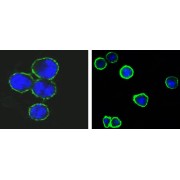
Leukocyte Antigen CD37 / TSPAN26 (CD37) Antibody
CD37, also known as GP52-40, TSPAN26, MGC120234. Enterz Protein NP001035120. It is a member of the transmembrane 4 super…
Ver producto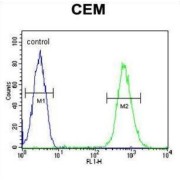
Leukocyte Antigen CD37 / TSPAN26 (CD37) Antibody
The protein encoded by this gene is a member of the transmembrane 4 superfamily, also known as the tetraspanin family. M…
Ver producto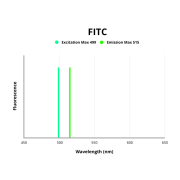
CD37 Antibody (FITC)
CD37 Antibody (FITC) is a Human Monoclonal Antibody against CD37.…
Ver producto