Human Transmembrane Emp24 Domain-Containing Protein 10 (TMED10) ELISA Kit

715€ (96 tests)
Por favor contáctenos para obtener información detallada sobre el precio y disponibilidad.
Name
Human Transmembrane Emp24 Domain-Containing Protein 10 (TMED10) ELISA Kit
Category
ELISA Kits
Provider
Abbexa
Reference
abx550434
Tested Applications
ELISA
Description
Human Transmembrane emp24 domain-containing protein 10 ELISA Kit is an ELISA Kit for the in vitro quantitative measurement of Human Transmembrane emp24 domain-containing protein 10 concentrations in tissue homogenates, cell lysates and other biological fluids.
Documentos del producto
Especificaciones del producto
| Category | ELISA Kits |
| Immunogen Target | Transmembrane Emp24 Domain-Containing Protein 10 (TMED10) |
| Reactivity | Human |
| Detection Method | Colorimetric |
| Assay Data | Quantitative |
| Assay Type | Sandwich |
| Test Range | 0.156 ng/ml - 10 ng/ml |
| Sensitivity | < 0.06 ng/ml |
| Recommended Dilution | Optimal dilutions/concentrations should be determined by the end user. |
| Size 1 | 96 tests |
| Form | Standard Form: Lyophilized |
| Tested Applications | ELISA |
| Sample Type | Tissue homogenates, cell lysates and other biological fluids. |
| Availability | Shipped within 5-15 working days. |
| Storage | Shipped at 4 °C. Upon receipt, store the kit according to the storage instruction in the kit's manual. |
| Dry Ice | No |
| Alias | TMP21,p23,TMP21,p24d1,S31I125,Tmp-21-I,S31III125,P24(DELTA) |
| Background | Elisa Kits for: TMED10 |
| Status | RUO |
| Note | THIS PRODUCT IS FOR RESEARCH USE ONLY. NOT FOR USE IN DIAGNOSTIC OR THERAPEUTIC PROCEDURES. The range and sensitivity is subject to change. Please contact us for the latest product information. For accurate results, sample concentrations must be diluted to mid-range of the kit. If you require a specific range, please contact us in advance or write your request in your order comments. Please note that our kits are optimised for detection of native samples, rather than recombinant proteins. We are unable to guarantee detection of recombinant proteins, as they may have different sequences or tertiary structures to the native protein. The stability of the kit is determined by the rate of activity loss. The loss rate is less than 5% within the expiration date under appropriate storage conditions. To minimize performance fluctuations, operation procedures and lab conditions should be strictly controlled. It is also strongly suggested that the whole assay is performed by the same user throughout. |
Background
TMED10, also known as p24δ1, is a critical component of the p24 family involved in regulating vesicular trafficking between the endoplasmic reticulum (ER), ER-Golgi intermediate compartment (ERGIC), and Golgi apparatus. It functions as a cargo receptor, facilitating the efficient transport of membrane and secretory proteins by interacting with COPII and COPI coat complexes during vesicle budding and retrieval. TMED10 plays an essential role in maintaining Golgi organization, protein sorting, and ER homeostasis, ensuring the proper maturation and localization of secretory proteins. It is ubiquitously expressed and is particularly abundant in rapidly dividing and secretory tissues. TMED10 has also been implicated in cellular signaling, including Wnt signaling and autophagy, where it modulates receptor trafficking and degradation pathways. Dysregulation of TMED10 is associated with neurodegenerative diseases, immune dysfunction, and cancers, where defective trafficking leads to protein mislocalization and stress. Knockdown studies reveal disrupted Golgi morphology, impaired protein secretion, and increased ER stress, highlighting its essential role in vesicular transport, protein homeostasis, and signaling regulation.
Productos relacionados

Transmembrane Emp24 Domain-Containing Protein 10 (TMED10) Antibody
This gene is a member of the EMP24/GP25L/p24 family and encodes a protein with a GOLD domain. This type I membrane prote…
Ver producto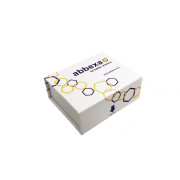
Transmembrane Emp24 Domain-Containing Protein 10 (TMED10) Antibody
Transmembrane Emp24-Like Trafficking Protein 10 (Yeast) Antibody is a Rabbit Polyclonal antibody against Transmembrane E…
Ver producto Transmembrane Emp24 Domain-Containing Protein 10 (TMED10) Antibody
TMED10 Antibody is a Rabbit Polyclonal against TMED10.…
Ver producto