Human Toll Like Receptor 1 (TLR1) CLIA Kit
845€ (96 tests)
Por favor contáctenos para obtener información detallada sobre el precio y disponibilidad.
Name
Human Toll Like Receptor 1 (TLR1) CLIA Kit
Category
CLIA Kits
Provider
Abbexa
Reference
abx493338
Tested Applications
CLIA
Description
Human Toll Like Receptor 1 (TLR1) Chemiluminescent Immunoassay (CLIA) Kit is a Sandwich Chemiluminescent Immunoassay (CLIA) Kit for use with Tissue homogenates, cell lysates and other biological fluids.
Documentos del producto
Instrucciones
Data sheet
Especificaciones del producto
| Category | CLIA Kits |
| Immunogen Target | Toll Like Receptor 1 (TLR1) |
| Reactivity | Human |
| Detection Method | Chemiluminescent |
| Assay Data | Quantitative |
| Assay Type | Sandwich |
| Test Range | 0.312 ng/ml - 20 ng/ml |
| Sensitivity | < 0.114 ng/ml |
| Recommended Dilution | Optimal dilutions/concentrations should be determined by the end user. |
| Size 1 | 96 tests |
| Size 2 | 5 × 96 tests |
| Size 3 | 10 × 96 tests |
| Form | Standard: Lyophilized |
| Tested Applications | CLIA |
| Sample Type | Tissue homogenates, cell lysates and other biological fluids. |
| Availability | Shipped within 5-20 working days. |
| Storage | Shipped at 4°C. Upon receipt, store the kit according to the storage instruction in the kit's manual. |
| Dry Ice | No |
| Alias | Toll-like receptor 1,TIL,CD281,rsc786,TIL. LPRS5,Toll/interleukin-1 receptor-like protein |
| Background | CLIA Kits TLR1 |
| Status | RUO |
| Note | THIS PRODUCT IS FOR RESEARCH USE ONLY. NOT FOR USE IN DIAGNOSTIC OR THERAPEUTIC PROCEDURES. The range and sensitivity is subject to change. Please contact us for the latest product information. For accurate results, sample concentrations must be diluted to mid-range of the kit. If you require a specific range, please contact us in advance or write your request in your order comments. Please note that our kits are optimised for detection of native samples, rather than recombinant proteins. We are unable to guarantee detection of recombinant proteins, as they may have different sequences or tertiary structures to the native protein. The stability of the kit is determined by the rate of activity loss. The loss rate is less than 5% within the expiration date under appropriate storage conditions. To minimize performance fluctuations, operation procedures and lab conditions should be strictly controlled. It is also strongly suggested that the whole assay is performed by the same user throughout. |
Background
Toll-like receptor 1 (TLR1) is a member of the toll-like receptor (TLR) family, a critical component of the innate immune system that detects and responds to pathogens through pattern recognition. TLRs are integral to recognizing pathogen-associated molecular patterns (PAMPs), which are conserved molecular structures in microbes, such as bacterial cell wall components. TLR1, in particular, functions predominantly as a co-receptor with TLR2 and recognizes lipoproteins and lipopeptides derived from bacterial membranes. By binding these ligands, TLR1 initiates intracellular signaling pathways that activate pro-inflammatory cytokine production and immune cell recruitment, key processes for mounting an immune response against infection. TLR1 is primarily expressed on immune cells like monocytes, macrophages, dendritic cells, and neutrophils, and is involved in host defense against bacterial, fungal, and some viral pathogens. Its role in immune responses makes TLR1 a valuable focus for understanding immune signaling pathways and developing potential treatments for infections, inflammatory diseases, and cancers.
Productos relacionados

Toll-Like Receptor 1 (TLR1) Antibody
TLR1 Antibody is a Rabbit Polyclonal antibody against TLR1. The protein encoded by this gene is a member of the Toll-lik…
Ver producto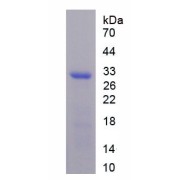
Human Toll Like Receptor 1 (TLR1) Protein
Human Toll Like Receptor 1 (TLR1) is a recombinant Human protein expressed in E. coli.…
Ver producto
Human Toll Like Receptor 1 (TLR1) Protein
Human Toll Like Receptor 1 (TLR1) is a recombinant Human protein expressed in E. coli.…
Ver producto