CD16 Antibody (Biotin)
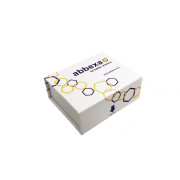
364€ (0.1 mg)
Por favor contáctenos para obtener información detallada sobre el precio y disponibilidad.
Name
CD16 Antibody (Biotin)
Category
Primary Antibodies
Provider
Abbexa
Reference
abx139445
Tested Applications
WB, FCM, IP
Description
CD16 Antibody is a Mouse Monoclonal against CD16.
Documentos del producto
Instrucciones
Data sheet
Especificaciones del producto
| Category | Primary Antibodies |
| Immunogen Target | Target: CD16 Immunogen: Human granulocytes. |
| Host | Mouse |
| Reactivity | Human |
| Assay Type | Concentration: 1 mg/ml |
| Recommended Dilution | Optimal dilutions/concentrations should be determined by the end user. |
| Clonality | Monoclonal |
| Conjugation | Biotin |
| Isotype | IgG1 |
| Clone ID | U970 |
| Size 1 | 0.1 mg |
| Tested Applications | WB, FCM, IP |
| Buffer | PBS solution with 15 mM sodium azide. |
| Availability | Shipped within 5-12 working days. |
| Storage | Store at 2-8°C. Do not freeze. |
| Dry Ice | No |
| UniProt ID | P08637 |
| Gene ID | 2214 |
| Alias | CD16,FCG3,CD16A,FCGR3,IGFR3,IMD20,FCR-10,FCRIII,CD16-II,FCGRIII,FCRIIIA,FcGRIIIA,Low affinity immunoglobulin gamma Fc region receptor III-A,IgG Fc receptor III-A,IgG Fc receptor III-2 |
| Background | Antibody anti-FCGR3A |
| Status | RUO |
| Note | THIS PRODUCT IS FOR RESEARCH USE ONLY. NOT FOR USE IN DIAGNOSTIC, THERAPEUTIC OR COSMETIC PROCEDURES. NOT FOR HUMAN OR ANIMAL CONSUMPTION. |
Background
FCGR3A, or Fc gamma receptor IIIa, is a membrane-bound protein that plays a crucial role in the immune system, specifically in mediating immune responses through the recognition of the Fc region of IgG antibodies. This receptor is primarily expressed on the surface of natural killer (NK) cells, macrophages, monocytes, and dendritic cells, where it facilitates antibody-dependent cellular cytotoxicity (ADCC) and other immune responses. It is part of the broader family of Fc gamma receptors (FcγRs), which are responsible for binding to the Fc region of IgG antibodies, thereby linking humoral and cellular immunity. FCGR3A has garnered considerable attention in immunology due to its role in recognizing and responding to immune complexes, infected cells, and tumor cells coated with IgG antibodies. Variations in the gene encoding FCGR3A have been implicated in differential responses to infections, autoimmune diseases, and cancer therapies
Productos relacionados

Fc Fragment of IgG Low Affinity IIIa Receptor (FCGR3A) Antibody
FCGR3A Antibody is a Rabbit Polyclonal antibody against FCGR3A. This gene encodes a receptor for the Fc portion of immun…
Ver producto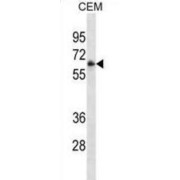
Fc Fragment of IgG Low Affinity IIIa Receptor (FCGR3A) Antibody
This gene encodes a receptor for the Fc portion of immunoglobulin G, and it is involved in the removal of antigen-antibo…
Ver producto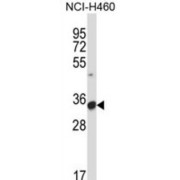
Fc Fragment of IgG Low Affinity IIIa Receptor (FCGR3A) Antibody
This gene encodes a receptor for the Fc portion of immunoglobulin G, and it is involved in the removal of antigen-antibo…
Ver producto