Signal Regulatory Protein Beta 1 (SIRPB1) Antibody
357.5€ (100 µg)
Por favor contáctenos para obtener información detallada sobre el precio y disponibilidad.
Name
Signal Regulatory Protein Beta 1 (SIRPB1) Antibody
Category
Primary Antibodies
Provider
Abbexa
Reference
abx122209
Tested Applications
ELISA, WB, IHC
Description
Rabbit Polyclonal against the SIRPB1 protein.
Documentos del producto
Instrucciones
Data sheet
Especificaciones del producto
| Category | Primary Antibodies |
| Immunogen Target | Target: Signal Regulatory Protein Beta 1 (SIRPB1) Immunogen: Recombinant fragment corresponding to 39-154 AA of human SIRPB1. |
| Host | Rabbit |
| Reactivity | Human |
| Assay Type | Concentration: Lyophilized form: Not applicable. After reconstitution: 1 mg/ml. |
| Recommended Dilution | ELISA: 1/20000 - 1/80000, WB: 1/500 - 1/2000, IHC: 1/100 - 1/200. Optimal dilutions/concentrations should be determined by the end user. |
| Clonality | Polyclonal |
| Conjugation | Unconjugated |
| Isotype | IgG |
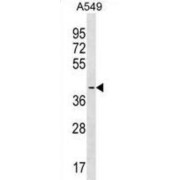
| Observed MW | Observed MW: 43 kDa |
| Purification | Purified by antigen affinity column chromatography. |
| Size 1 | 100 µg |
| Size 2 | 1 mg |
| Form | Lyophilized |
| Tested Applications | ELISA, WB, IHC |
| Buffer | Prior to lyophilization: 1% BSA and 0.02% NaN3. |
| Availability | Shipped within 7-15 working days. |
| Storage | Store at -20 °C. Avoid repeated freeze/thaw cycles. |
| Dry Ice | No |
| NCBI Accession | BC025286 |
| Alias | CD172 antigen-like family member B,CD172b,SIRP-BETA-1 |
| Background | Antibody anti-SIRPB1 |
| Status | RUO |
| Note | THIS PRODUCT IS FOR RESEARCH USE ONLY. NOT FOR USE IN DIAGNOSTIC, THERAPEUTIC OR COSMETIC PROCEDURES. NOT FOR HUMAN OR ANIMAL CONSUMPTION. |
Background
Signal regulatory protein beta-1 (SIRPB1) is a transmembrane glycoprotein that is part of the signal regulatory protein (SIRP) family within the immunoglobulin superfamily (IgSF). SIRPB1 is primarily expressed on myeloid cells, such as macrophages, dendritic cells, and granulocytes, and functions as an activating receptor involved in immune regulation, phagocytosis, and cellular signaling. Unlike SIRPA, another family member which interacts with CD47 to deliver inhibitory signals to prevent “self” cell phagocytosis, SIRPB1 typically serves as an activating receptor and does not interact directly with CD47. SIRPB1 plays a role in modulating immune responses, particularly through its association with DAP12 (DNAX activation protein of 12 kDa), an adaptor molecule containing immunoreceptor tyrosine-based activation motifs (ITAMs). Upon activation, SIRPB1 influences signaling cascades that lead to pro-inflammatory cytokine release, phagocytosis, and cellular migration, especially in response to pathogens or tissue injury. Because of its involvement in immune activation, SIRPB1 has become of interest in cancer, infectious diseases, and inflammatory disorders.
Productos relacionados
Signal Regulatory Protein Beta 1 (SIRPB1) Antibody
The protein encoded by this gene is a member of the signal-regulatory-protein (SIRP) family, and also belongs to the imm…
Ver producto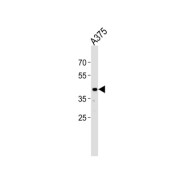
Signal Regulatory Protein Beta 1 (SIRPB1) Antibody
Immunoglobulin-like cell surface receptor involved in the negative regulation of receptor tyrosine kinase-coupled signal…
Ver producto Signal Regulatory Protein Beta 1 (SIRPB1) Antibody
Rabbit Polyclonal against the SIRPB1 protein.…
Ver producto