Rhodopsin Kinase (GRK1) Antibody
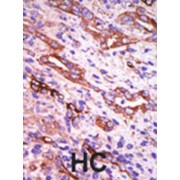
292.5€ (80 µl)
Por favor contáctenos para obtener información detallada sobre el precio y disponibilidad.
Name
Rhodopsin Kinase (GRK1) Antibody
Category
Primary Antibodies
Provider
Abbexa
Reference
abx033108
Tested Applications
ELISA, WB, IHC
Description
Protein kinases are enzymes that transfer a phosphate group from a phosphate donor, generally the g phosphate of ATP, onto an acceptor amino acid in a substrate protein. By this basic mechanism, protein kinases mediate most of the signal transduction in eukaryotic cells, regulating cellular metabolism, transcription, cell cycle progression, cytoskeletal rearrangement and cell movement, apoptosis, and differentiation. With more than 500 gene products, the protein kinase family is one of the largest families of proteins in eukaryotes. The family has been classified in 8 major groups based on sequence comparison of their tyrosine (PTK) or serine/threonine (STK) kinase catalytic domains. The AGC kinase group consists of 63 kinases including the cyclic nucleotide-regulated protein kinase (PKA & PKG) family, the diacylglycerol-activated/phospholipid-dependent protein kinase C (PKC) family, the related to PKA and PKC (RAC/Akt) protein kinase family, the kinases that phosphorylate G protein-coupled receptors family (ARK), and the kinases that phosphorylate ribosomal protein S6 family (RSK). The AGC kinase group consists of 63 kinases including the cyclic nucleotide-regulated protein kinase (PKA & PKG) family, the diacylglycerol-activated/phospholipid-dependent protein kinase C (PKC) family, the related to PKA and PKC (RAC/Akt) protein kinase family, the kinases that phosphorylate G protein-coupled receptors family (ARK), and the kinases that phosphorylate ribosomal protein S6 family (RSK).
Documentos del producto
Instrucciones
Data sheet
Especificaciones del producto
| Category | Primary Antibodies |
| Immunogen Target | Target: Rhodopsin Kinase (GRK1) Immunogen: KLH-conjugated synthetic peptide between 520-550 amino acids from the C-terminal region of human GRK1. |
| Host | Rabbit |
| Reactivity | Human, Mouse |
| Recommended Dilution | WB: 1/1000, IHC-P: 1/50 - 1/100. Not tested in IHC-F. Optimal dilutions/concentrations should be determined by the end user. |
| Clonality | Polyclonal |
| Conjugation | Unconjugated |
| Isotype | IgG |
| Observed MW | Calculated MW: 63.5 kDa |
| Purification | Purified through a protein G column, eluted with high and low pH buffers and neutralized immediately, followed by dialysis against PBS. |
| Size 1 | 80 µl |
| Size 2 | 400 µl |
| Form | Liquid |
| Tested Applications | ELISA, WB, IHC |
| Buffer | PBS containing 0.09% sodium azide. |
| Availability | Shipped within 5-10 working days. |
| Storage | Aliquot and store at -20°C. Avoid repeated freeze/thaw cycles. |
| Dry Ice | No |
| UniProt ID | Q15835 |
| Background | Antibody anti-GRK1 |
| Status | RUO |
| Note | THIS PRODUCT IS FOR RESEARCH USE ONLY. NOT FOR USE IN DIAGNOSTIC, THERAPEUTIC OR COSMETIC PROCEDURES. NOT FOR HUMAN OR ANIMAL CONSUMPTION. |
Productos relacionados
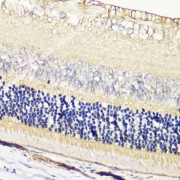
Rhodopsin Kinase (GRK1) Antibody
GRK1 Antibody is a Rabbit Polyclonal antibody against GRK1. This gene encodes a member of the guanine nucleotide-binding…
Ver producto
Rhodopsin Kinase (GRK1) Antibody
GRK1 Antibody is a Rabbit Polyclonal antibody against GRK1. This gene encodes a member of the guanine nucleotide-binding…
Ver producto Rhodopsin Kinase (GRK1) Antibody
Protein kinases are enzymes that transfer a phosphate group from a phosphate donor, generally the g phosphate of ATP, on…
Ver producto