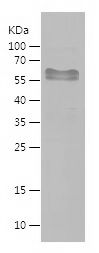
Neurogenic Differentiation Factor 1 (NEUROD1) Antibody

292.5€ (80 µl)
Por favor contáctenos para obtener información detallada sobre el precio y disponibilidad.
Name
Neurogenic Differentiation Factor 1 (NEUROD1) Antibody
Category
Primary Antibodies
Provider
Abbexa
Reference
abx031452
Tested Applications
ELISA, WB
Description
NeuroD1 is a transcriptional activator that acts as a differentiation factor during neurogenesis. It has been demonstrated to bind to the insulin gene E-box. Efficient DNA binding requires dimerization with another basic helix-loop-helix (bHLH) protein. Defects in NEUROD1 are a cause of maturity onset diabetes of the young type VI (MODY6). MODY6 is a form of non-insulin-dependent diabetes mellitus characterized by an autosomal dominant mode of inheritance, onset during young adulthood and a primary defect in insulin secretion.
Documentos del producto
Instrucciones
Data sheet
Especificaciones del producto
| Category | Primary Antibodies |
| Immunogen Target | Target: Neurogenic Differentiation Factor 1 (NEUROD1) Immunogen: KLH-conjugated synthetic peptide between 318-348 amino acids from the C-terminal region of human NeuroD1. |
| Host | Rabbit |
| Reactivity | Human, Mouse, Rat |
| Recommended Dilution | WB: 1/1000. Optimal dilutions/concentrations should be determined by the end user. |
| Clonality | Polyclonal |
| Conjugation | Unconjugated |
| Isotype | IgG |
| Observed MW | Calculated MW: 39.9 kDa |
| Purification | Purified through a protein G column, eluted with high and low pH buffers and neutralized immediately, followed by dialysis against PBS. |
| Size 1 | 80 µl |
| Size 2 | 400 µl |
| Form | Liquid |
| Tested Applications | ELISA, WB |
| Buffer | PBS containing 0.09% sodium azide. |
| Availability | Shipped within 5-10 working days. |
| Storage | Aliquot and store at -20°C. Avoid repeated freeze/thaw cycles. |
| Dry Ice | No |
| UniProt ID | Q13562 |
| NCBI Accession | NP_002491.2 |
| Background | Antibody anti-NeuroD1 |
| Status | RUO |
| Note | THIS PRODUCT IS FOR RESEARCH USE ONLY. NOT FOR USE IN DIAGNOSTIC, THERAPEUTIC OR COSMETIC PROCEDURES. NOT FOR HUMAN OR ANIMAL CONSUMPTION. |
Productos relacionados
Neurogenic Differentiation Factor 1 (NEUROD1) Antibody
NeuroD1 is a transcriptional activator that acts as a differentiation factor during neurogenesis. It has been demonstrat…
Ver producto