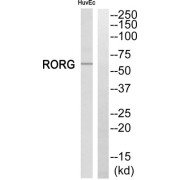
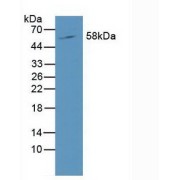
Mouse Nuclear Receptor Ror-Gamma (RORC) Protein
Este producto es parte de RAR related orphan receptor
Product Graph
221€ (10 µg)

Por favor contáctenos para obtener información detallada sobre el precio y disponibilidad.

935106861
info@markelab.com
name
Mouse Nuclear Receptor Ror-Gamma (RORC) Protein
category
Proteins and Peptides
provider
Abbexa
reference
abx658876
tested applications
WB, SDS-PAGE

Description

Mouse Nuclear Receptor Ror-Gamma (RORC) Protein is a recombinant Mouse protein expressed in E. coli.

Documents del producto

Instrucciones
Data sheet
Descargar

Product specifications

Category
Proteins and Peptides
Immunogen Target
Nuclear Receptor Ror-Gamma (RORC)
Host
E. coli
Assay Type
Activity: Not tested
Sequence Fragment: Asp267-Lys516
Tag: N-terminal His Tag
Origin
Mouse
Conjugation
Unconjugated
Observed MW
Calculated MW: 32.7 kDa  Observed MW (SDS-PAGE): 33 kDa
Expression
Recombinant
Purity
> 90%
Size 1
10 µg
Size 2
50 µg
Size 3
100 µg
Size 4
200 µg
Size 5
500 µg
Form
Lyophilized
Tested Applications
WB, SDS-PAGE
Buffer
Prior to lyophilization: PBS, pH 7.4, containing 0.01% Sarcosyl, 1 mM DTT, 5% Trehalose and Proclin-300.
Availability
Shipped within 5-7 working days.
Storage
Store lyophilized form at 2-8°C for up to 1 month. For longer periods, store lyophilized or liquid at -80°C. Avoid repeated freeze–thaw cycles.
Dry Ice
No
UniProt ID
P51450
Gene ID
19885
Background
Protein RORC
Status
RUO
Note
THIS PRODUCT IS FOR RESEARCH USE ONLY. NOT FOR USE IN DIAGNOSTIC, THERAPEUTIC OR COSMETIC PROCEDURES. NOT FOR HUMAN OR ANIMAL CONSUMPTION.
To keep the original salt concentration, we recommend reconstituting to the original concentration prior to lyophilization (see Concentration) in ddH2O. If a lower concentration is required, dilute in PBS, pH 7.4. If a higher concentration is required, the product can be reconstituted directly in PBS, pH 7.4, though please note that this will change the overall salt concentration. The stock concentration should be between 0.1-1.0 mg/ml. Do not vortex.
Concentration: Prior to lyophilization: 200 µg/ml

Descripción

Related Products

EH0494

Human RORC (Nuclear receptor ROR-gamma) ELISA Kit

Ver Producto
FNab07389

RORC antibody

Nuclear receptor that binds DNA as a monomer to ROR response elements(RORE) containing a single core motif half-site 5'-AGGTCA-3' preceded by a short A-T-rich sequence. Key regulator of cellular differentiation, immunity, peripheral circadian rhythm as well as lipid, steroid, xenobiotics and glucose metabolism(PubMed:19381306, PubMed:19965867, PubMed:22789990, PubMed:26160376, PubMed:20203100). Considered to have intrinsic transcriptional activity, have some natural ligands like oxysterols that act as agonists(25-hydroxycholesterol) or inverse agonists(7-oxygenated sterols), enhancing or repressing the transcriptional activity, respectively(PubMed:19965867, PubMed:22789990). Recruits distinct combinations of cofactors to target gene regulatory regions to modulate their transcriptional expression, depending on the tissue, time and promoter contexts. Regulates the circadian expression of clock genes such as CRY1, ARNTL/BMAL1 and NR1D1 in peripheral tissues and in a tissue-selective manner. Competes with NR1D1 for binding to their shared DNA response element on some clock genes such as ARNTL/BMAL1, CRY1 and NR1D1 itself, resulting in NR1D1-mediated repression or RORC-mediated activation of the expression, leading to the circadian pattern of clock genes expression. Therefore influences the period length and stability of the clock. Involved in the regulation of the rhythmic expression of genes involved in glucose and lipid metabolism, including PLIN2 and AVPR1A(PubMed:19965867). Negative regulator of adipocyte differentiation through the regulation of early phase genes expression, such as MMP3. Controls adipogenesis as well as adipocyte size and modulates insulin sensitivity in obesity. In liver, has specific and redundant functions with RORA as positive or negative modulator of expression of genes encoding phase I and Phase II proteins involved in the metabolism of lipids, steroids and xenobiotics, such as SULT1E1. Also plays also a role in the regulation of hepatocyte glucose metabolism through the regulation of G6PC and PCK1(PubMed:19965867). Regulates the rhythmic expression of PROX1 and promotes its nuclear localization(PubMed:19381306, PubMed:19965867, PubMed:22789990, PubMed:26160376, PubMed:20203100). Plays an indispensable role in the induction of IFN-gamma dependent anti-mycobacterial systemic immunity(PubMed:26160376). Isoform 2: Essential for thymopoiesis and the development of several secondary lymphoid tissues, including lymph nodes and Peyer's patches. Required for the generation of LTi(lymphoid tissue inducer) cells. Regulates thymocyte survival through DNA-binding on ROREs of target gene promoter regions and recruitment of coactivaros via the AF-2. Also plays a key role, downstream of IL6 and TGFB and synergistically with RORA, for lineage specification of uncommitted CD4(+) T-helper(T(H)) cells into T(H)17 cells, antagonizing the T(H)1 program. Probably regulates IL17 and IL17F expression on T(H) by binding to the essential enhancer conserved non-coding sequence 2(CNS2) in the IL17-IL17F locus. May also play a role in the pre-TCR activation cascade leading to the maturation of alpha/beta T-cells and may participate in the regulation of DNA accessibility in the TCR-J(alpha) locus.

Ver Producto
FNab10046

RORC antibody

Nuclear receptor that binds DNA as a monomer to ROR response elements(RORE) containing a single core motif half-site 5'-AGGTCA-3' preceded by a short A-T-rich sequence. Key regulator of cellular differentiation, immunity, peripheral circadian rhythm as well as lipid, steroid, xenobiotics and glucose metabolism(PubMed:19381306, PubMed:19965867, PubMed:22789990, PubMed:26160376, PubMed:20203100). Considered to have intrinsic transcriptional activity, have some natural ligands like oxysterols that act as agonists(25-hydroxycholesterol) or inverse agonists(7-oxygenated sterols), enhancing or repressing the transcriptional activity, respectively(PubMed:19965867, PubMed:22789990). Recruits distinct combinations of cofactors to target gene regulatory regions to modulate their transcriptional expression, depending on the tissue, time and promoter contexts. Regulates the circadian expression of clock genes such as CRY1, ARNTL/BMAL1 and NR1D1 in peripheral tissues and in a tissue-selective manner. Competes with NR1D1 for binding to their shared DNA response element on some clock genes such as ARNTL/BMAL1, CRY1 and NR1D1 itself, resulting in NR1D1-mediated repression or RORC-mediated activation of the expression, leading to the circadian pattern of clock genes expression. Therefore influences the period length and stability of the clock. Involved in the regulation of the rhythmic expression of genes involved in glucose and lipid metabolism, including PLIN2 and AVPR1A(PubMed:19965867). Negative regulator of adipocyte differentiation through the regulation of early phase genes expression, such as MMP3. Controls adipogenesis as well as adipocyte size and modulates insulin sensitivity in obesity. In liver, has specific and redundant functions with RORA as positive or negative modulator of expression of genes encoding phase I and Phase II proteins involved in the metabolism of lipids, steroids and xenobiotics, such as SULT1E1. Also plays also a role in the regulation of hepatocyte glucose metabolism through the regulation of G6PC and PCK1(PubMed:19965867). Regulates the rhythmic expression of PROX1 and promotes its nuclear localization(PubMed:19381306, PubMed:19965867, PubMed:22789990, PubMed:26160376, PubMed:20203100). Plays an indispensable role in the induction of IFN-gamma dependent anti-mycobacterial systemic immunity(PubMed:26160376). Isoform 2: Essential for thymopoiesis and the development of several secondary lymphoid tissues, including lymph nodes and Peyer's patches. Required for the generation of LTi(lymphoid tissue inducer) cells. Regulates thymocyte survival through DNA-binding on ROREs of target gene promoter regions and recruitment of coactivaros via the AF-2. Also plays a key role, downstream of IL6 and TGFB and synergistically with RORA, for lineage specification of uncommitted CD4(+) T-helper(T(H)) cells into T(H)17 cells, antagonizing the T(H)1 program. Probably regulates IL17 and IL17F expression on T(H) by binding to the essential enhancer conserved non-coding sequence 2(CNS2) in the IL17-IL17F locus. May also play a role in the pre-TCR activation cascade leading to the maturation of alpha/beta T-cells and may participate in the regulation of DNA accessibility in the TCR-J(alpha) locus.

Ver Producto