Medium-wave-sensitive opsin 1 (OPN1MW) Antibody (FITC)
169€ (20 µg)
Por favor contáctenos para obtener información detallada sobre el precio y disponibilidad.
Name
Medium-wave-sensitive opsin 1 (OPN1MW) Antibody (FITC)
Category
Primary Antibodies
Provider
Abbexa
Reference
abx344006
Description
Medium-wave-sensitive opsin 1 (OPN1MW) Antibody (FITC) is a Rabbit Polyclonal antibody conjugated to FITC for the detection of Human OPN1MW.
Documentos del producto
Instrucciones
Data sheet
Especificaciones del producto
| Category | Primary Antibodies |
| Immunogen Target | Target: Medium-wave-sensitive opsin 1 (OPN1MW) Immunogen: Recombinant Human Medium-wave-sensitive opsin 1 protein (1-52 AA) |
| Host | Rabbit |
| Reactivity | Human |
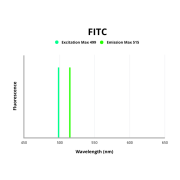
| Detection Method | Laser Line: 488 Excitation/Emission: 499/515 |
| Recommended Dilution | Optimal dilutions/concentrations should be determined by the end user. |
| Clonality | Polyclonal |
| Conjugation | FITC |
| Isotype | IgG |
| Purity | > 95% |
| Purification | Purified by Protein G chromatography. |
| Size 1 | 20 µg |
| Size 2 | 50 µg |
| Size 3 | 100 µg |
| Size 4 | 200 µg |
| Size 5 | 1 mg |
| Form | Liquid |
| Buffer | 0.01 M PBS, pH 7.4, 0.03% Proclin-300 and 50% glycerol. |
| Availability | Shipped within 5-10 working days. |
| Storage | Aliquot and store at -20°C. Avoid repeated freeze/thaw cycles. |
| Dry Ice | No |
| UniProt ID | P04001 |
| Alias | OPN1MW,opsin 1 (cone pigments),medium-wave-sensitive,opsin 1 (cone pigments) opsin 1 medium wave sensitive,opsin 1 |
| Background | Antibody anti-OPN1MW |
| Status | RUO |
| Note | THIS PRODUCT IS FOR RESEARCH USE ONLY. NOT FOR USE IN DIAGNOSTIC, THERAPEUTIC OR COSMETIC PROCEDURES. NOT FOR HUMAN OR ANIMAL CONSUMPTION. |
Background
OPN1MW is another type of opsin located in the cone cells of the retina, responsible for detecting medium wavelengths of light, typically in the green region of the visible spectrum. It is sensitive to light in the wavelength range of approximately 534–545 nm. OPN1MW is part of the trichromatic color vision system in humans and helps differentiate green hues from other colors. Along with the long- and short-wave opsins, it contributes to the full spectrum of human color vision. When activated by light, OPN1MW converts light into an electrical signal that is processed by the brain, allowing for the perception of colors across a range of wavelengths. Mutations in the OPN1MW gene can lead to color vision deficiencies, particularly affecting the ability to distinguish between green and other colors. The study of OPN1MW is important for understanding color blindness and visual disorders, particularly those related to the green-sensitive cone cells.
Productos relacionados
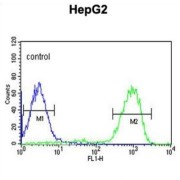
Medium-Wave-Sensitive Opsin 1 (OPN1MW) Antibody
OPN1MW encodes for a light absorbing visual pigment of the opsin gene family. The encoded protein is called green cone p…
Ver producto
Medium-wave-sensitive opsin 1 (OPN1MW) Antibody
Medium-wave-sensitive opsin 1 (OPN1MW) Antibody is a Rabbit Polyclonal antibody for the detection of Human OPN1MW.…
Ver producto Medium-wave-sensitive opsin 1 (OPN1MW) Antibody (HRP)
Medium-wave-sensitive opsin 1 (OPN1MW) Antibody (HRP) is a Rabbit Polyclonal antibody conjugated to HRP for the detectio…
Ver producto