Killer Cell Immunoglobulin Like Receptor 2DL3 (KIR2DL3) Antibody (HRP)
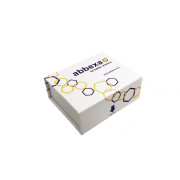
169€ (20 µg)
Por favor contáctenos para obtener información detallada sobre el precio y disponibilidad.
Name
Killer Cell Immunoglobulin Like Receptor 2DL3 (KIR2DL3) Antibody (HRP)
Category
Primary Antibodies
Provider
Abbexa
Reference
abx312859
Tested Applications
ELISA
Description
KIR2DL3 Antibody (HRP) is a Rabbit Polyclonal against KIR2DL3 conjugated to HRP.
Documentos del producto
Instrucciones
Data sheet
Especificaciones del producto
| Category | Primary Antibodies |
| Immunogen Target | Target: Killer Cell Immunoglobulin Like Receptor 2DL3 (KIR2DL3) Immunogen: Recombinant human Killer cell immunoglobulin-like receptor 2DL3 protein (22-245AA). |
| Host | Rabbit |
| Reactivity | Human |
| Recommended Dilution | Optimal dilutions/concentrations should be determined by the end user. |
| Clonality | Polyclonal |
| Conjugation | HRP |
| Isotype | IgG |
| Purity | > 95% |
| Purification | Purified by Protein G. |
| Size 1 | 20 µg |
| Size 2 | 50 µg |
| Size 3 | 100 µg |
| Size 4 | 200 µg |
| Size 5 | 1 mg |
| Form | Liquid |
| Tested Applications | ELISA |
| Buffer | 0.01 M PBS, pH 7.4, 0.03% Proclin-300 and 50% Glycerol. |
| Availability | Shipped within 5-10 working days. |
| Storage | Aliquot and store at -20°C. Avoid exposure to light. Avoid repeated freeze/thaw cycles. |
| Dry Ice | No |
| UniProt ID | P43628 |
| Gene ID | 3804 |
| NCBI Accession | NP_056952.2, NM_015868.2 |
| OMIM | 604938 |
| Alias | CD158 antigen-like family member B2,KIR-023GB,Killer inhibitory receptor cl 2-3,NKAT2a,NKAT2b,GL183,CD158b,KIR2DL |
| Background | Antibody anti-KIR2DL3 |
| Status | RUO |
| Note | THIS PRODUCT IS FOR RESEARCH USE ONLY. NOT FOR USE IN DIAGNOSTIC, THERAPEUTIC OR COSMETIC PROCEDURES. NOT FOR HUMAN OR ANIMAL CONSUMPTION. |
Background
KIR2DL3 is an inhibitory receptor that is part of the killer cell immunoglobulin-like receptor (KIR) family, which is primarily expressed on natural killer (NK) cells and some T-cell subsets. This receptor plays a pivotal role in immune surveillance and modulation by binding to specific HLA class I molecules, particularly HLA-C alleles, on potential target cells. KIR2DL3 recognizes HLA-C1 (characterized by an asparagine at position 80), which is different from HLA-C2 (lysine at position 80) recognized by related receptors like KIR2DL1. By binding to HLA-C1, KIR2DL3 sends inhibitory signals that regulate NK cell cytotoxicity, promoting immune tolerance and minimizing the risk of autoimmunity. The KIR genes, including KIR2DL3, are located on chromosome 19q13.4 in a highly polymorphic region known as the leukocyte receptor complex (LRC). Genetic variability within this complex, particularly in the KIR2DL3 and its HLA-C ligands, contributes to diversity in immune response among individuals. Variants in KIR2DL3 and other KIR genes are associated with differential susceptibility to diseases, including autoimmune disorders, viral infections, and cancers.
Productos relacionados

Killer Cell Immunoglobulin Like Receptor 2DL3 (KIR2DL3) Antibody
KIR2DL3 Antibody is a Rabbit Polyclonal antibody against KIR2DL3. Killer cell immunoglobulin-like receptors (KIRs) are t…
Ver producto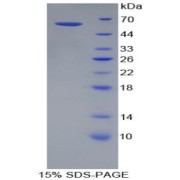
Human Killer Cell Immunoglobulin Like Receptor 2DL3 (KIR2DL3) Protein
Human Killer Cell Immunoglobulin Like Receptor 2DL3 (KIR2DL3) is a recombinant Human protein expressed in E. coli.…
Ver producto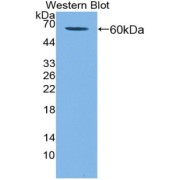
Killer Cell Immunoglobulin Like Receptor 2DL3 (KIR2DL3) Antibody
Polyclonal Antibody to Killer Cell Immunoglobulin Like Receptor 2DL3 (KIR2DL3).…
Ver producto