Human LPAR1 (Lysophosphatidic acid receptor 1) ELISA Kit
Contáctenos para saber el precio
Por favor contáctenos para obtener información detallada sobre el precio y disponibilidad.
Name
Human LPAR1 (Lysophosphatidic acid receptor 1) ELISA Kit
Category
ELISA Kits
Provider
FineTest
Reference
EH2508
Tested Applications
ELISA
Documentos del producto
Instrucciones
Data sheet
Especificaciones del producto
| Category | ELISA Kits |
| Reactivity | Human |
| Detection Method | Colorimetric |
| Assay Data | 4 hours |
| Assay Type | Sandwich ELISA, Double Antibody |
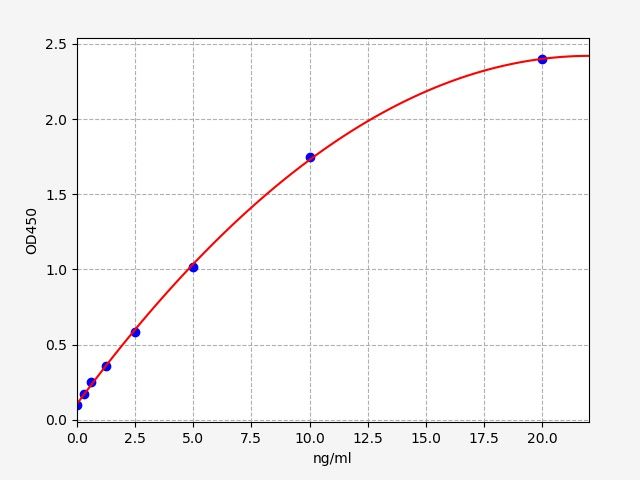
| Test Range | 0.313-20ng/ml |
| Sensitivity | 0.188ng/ml |
| Size 1 | 96T |
| Tested Applications | ELISA |
| Sample Type | Serum, Plasma, Cell Culture Supernatant, cell or tissue lysate, Other liquid samples |
| Availability | Shipped within 10-14 working days. |
| Storage | 2-8 °C for 12 months |
| UniProt ID | Q92633 |
| Alias | LPAR1,EDG2,LPA1,VZG1,edg-2,vzg-1,Gpcr26,Mrec1.3,rec.1.3,GPR26,endothelial differentiation gene 2,lysophosphatidic acid G-protein-coupled receptor, 2,LPA receptor 1,lysophosphatidic acid receptor Edg-2 |
| Background | Elisa kits for LPAR1 |
| Status | RUO |
Background
LPAR1 is a G protein-coupled receptor activated by lysophosphatidic acid (LPA), a bioactive phospholipid involved in diverse cellular processes. LPAR1 is widely expressed in various tissues, including the brain, lungs, and fibroblasts, where it mediates cell proliferation, survival, migration, and cytoskeletal reorganization. LPAR1 couples to multiple G proteins (Gi, Gq, and G12/13), activating pathways such as MAPK, Rho/ROCK, and PI3K/Akt. In fibrosis, LPAR1 signaling promotes fibroblast activation and extracellular matrix deposition, contributing to pulmonary, hepatic, and renal fibrosis. It is also implicated in neuropathic pain, where LPAR1 activation sensitizes pain pathways and amplifies neuronal signaling. In cancer, LPAR1 drives tumor growth, metastasis, and angiogenesis, particularly in breast and lung cancers. Dysregulation of LPAR1 is associated with inflammatory disorders, cancer progression, and fibrosis. LPAR1 antagonists are being developed as potential therapies for fibrotic diseases, neuropathic pain, and cancer, highlighting its role as a key modulator of cell migration and tissue remodeling.
Productos relacionados

LPA Receptor 1 Antibody
LPA Receptor 1 Antibody is a Rabbit Polyclonal antibody against Mouse.…
Ver producto
Human Lysophosphatidic Acid Receptor 1 (LPAR1) ELISA Kit
Human Lysophosphatidic Acid Receptor 1 (LPAR1) ELISA Kit is an ELISA Kit for the in vitro quantitative measurement of Hu…
Ver producto
Lysophosphatidic Acid Receptor 1 (LPAR1) Antibody
LPAR1 Antibody is a Rabbit Polyclonal against LPAR1.…
Ver producto