Human Hepcidin (HAMP) Protein

390€ (50 µg)
Por favor contáctenos para obtener información detallada sobre el precio y disponibilidad.
Name
Human Hepcidin (HAMP) Protein
Category
Proteins and Peptides
Provider
Abbexa
Reference
abx655669
Tested Applications
WB, SDS-PAGE
Description
Human Hepcidin (HAMP) Protein (Active) is an Active recombinant Human protein expressed in E. coli.
Documentos del producto
Instrucciones
Data sheet
Especificaciones del producto
| Category | Proteins and Peptides |
| Immunogen Target | Hepcidin (HAMP) |
| Host | 293F cells |
| Assay Type | Activity: Active Biological Activity: Hepcidin is a regulator of iron metabolism, inhibiting iron transport by binding to the iron export channel Ferroportin (FPN) which is located on the basolateral surface of gut enterocytes and the plasma membrane of reticuloendothelial cells (macrophages). Hepcidin ultimately breaks down the transporter protein in the lysosome. Inhibiting FPN prevents iron from being exported, resulting in iron being sequestered in the cells. A binding ELISA assay was conducted to detect the interaction of recombinant human Hepcidin and recombinant human FPN. Briefly, Hepcidin was diluted serially in PBS with 0.01% BSA (pH 7.4). Duplicate samples of 100 μl were then transferred to FPN-coated microplate wells and incubated for 2 h at 37°C. Wells were washed with PBST and incubated for 1 h with anti-Hepcidin polyclonal antibody, then aspirated and washed 3 times. After incubation with HRP-conjugated secondary antibody, wells were aspirated and washed 3 times. TMB substrate solution was added and wells were incubated for 15-25 minutes at 37 °C. Finally, 50 μl stop solution was added to the wells and the absorbance was read at 450 nm immediately. Sequence Fragment: Ser25-Thr84 Tag: N-terminal His Tag and Fc tag |
| Origin | Human |
| Conjugation | Unconjugated |
| Observed MW | Calculated MW: 34.1 kDa Observed MW (SDS-PAGE): 34 kDa, 38 kDa |
| Expression | Recombinant |
| Purity | > 80% |
| Size 1 | 50 µg |
| Size 2 | 100 µg |
| Size 3 | 200 µg |
| Size 4 | 500 µg |
| Size 5 | 1 mg |
| Form | Lyophilized |
| Tested Applications | WB, SDS-PAGE |
| Buffer | Prior to lyophilization: PBS, pH 7.4, containing 5% Trehalose. |
| Availability | Shipped within 5-7 working days. |
| Storage | Store lyophilized form at 2-8°C for up to 1 month. For longer periods, store lyophilized or liquid at -80°C. Avoid repeated freeze–thaw cycles. |
| Dry Ice | No |
| UniProt ID | P81172 |
| Gene ID | 57817 |
| Alias | HEPC,PLTR,HFE2B,LEAP1,Putative liver tumor regressor,PLTR |
| Background | Protein HAMP |
| Status | RUO |
| Note | THIS PRODUCT IS FOR RESEARCH USE ONLY. NOT FOR USE IN DIAGNOSTIC, THERAPEUTIC OR COSMETIC PROCEDURES. NOT FOR HUMAN OR ANIMAL CONSUMPTION. To keep the original salt concentration, we recommend reconstituting to the original concentration prior to lyophilization (see Concentration) in ddH2O. If a lower concentration is required, dilute in 10 mM PBS, pH 7.4. If a higher concentration is required, the product can be reconstituted directly in 10 mM PBS, pH 7.4, though please note that this will change the overall salt concentration. The stock concentration should be between 0.1-1.0 mg/ml. Do not vortex. Endotoxin Level: < 1.0 EU/µg (LAL method) Concentration: Prior to lyophilization: 400 µg/ml |
Background
Hepcidin Antimicrobial Peptide (HAMP) is a small, liver-derived peptide hormone that serves as the master regulator of systemic iron homeostasis and possesses antimicrobial properties. Hepcidin controls iron levels by binding to the iron export protein ferroportin, leading to its internalization and degradation, thereby reducing iron release from enterocytes, macrophages, and hepatocytes into the bloodstream. This regulation is critical for preventing iron overload and ensuring adequate iron availability for erythropoiesis. HAMP expression is modulated by factors such as systemic iron levels, inflammation, erythropoietic demand, and hypoxia. Inflammatory cytokines, particularly IL-6, stimulate HAMP production via the JAK-STAT pathway, contributing to the anemia of chronic disease by sequestering iron in storage sites. Conversely, inadequate HAMP expression leads to conditions such as hereditary hemochromatosis and iron-loading anemias. In addition to its role in iron metabolism, HAMP exhibits antimicrobial activity by directly targeting bacterial pathogens, making it a key component of the innate immune response. Therapeutic manipulation of HAMP is being explored for treating iron disorders and related conditions.
Productos relacionados
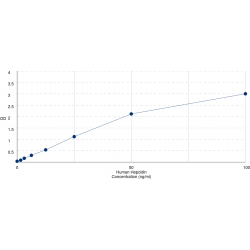
Human Hepcidin (HAMP) ELISA Kit
Human Hepcidin (HAMP) ELISA Kit is an ELISA Kit for the in vitro quantitative measurement of Human Hepcidin concentratio…
Ver producto
Mouse Hepcidin (HAMP) ELISA Kit
Mouse Hepcidin (HAMP) ELISA Kit is an ELISA Kit for the in vitro quantitative measurement of Mouse Hepcidin (HAMP) conce…
Ver producto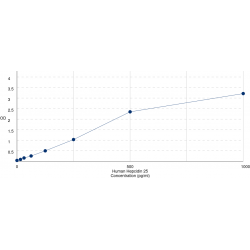
Human Hepcidin 25 (Hepc-25) ELISA Kit
Human Hepcidin 25 (Hepc-25) ELISA Kit is an ELISA Kit for the in vitro quantitative measurement of Human Hepcidin 25 (He…
Ver producto