Human CCR7 (C-C chemokine receptor type 7) ELISA Kit
Contáctenos para saber el precio
Por favor contáctenos para obtener información detallada sobre el precio y disponibilidad.
Name
Human CCR7 (C-C chemokine receptor type 7) ELISA Kit
Category
ELISA Kits
Provider
FineTest
Reference
EH1867
Tested Applications
ELISA
Documentos del producto
Instrucciones
Data sheet
Especificaciones del producto
| Category | ELISA Kits |
| Reactivity | Human |
| Detection Method | Colorimetric |
| Assay Data | 4 hours |
| Assay Type | Sandwich ELISA, Double Antibody |
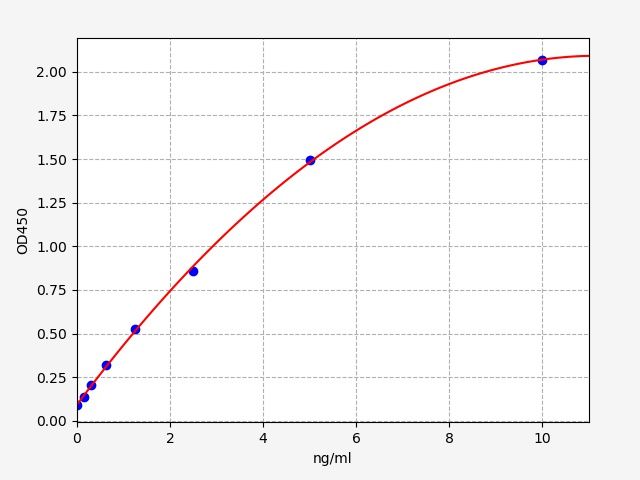
| Test Range | 0.156-10ng/ml |
| Sensitivity | 0.094ng/ml |
| Size 1 | 96T |
| Tested Applications | ELISA |
| Sample Type | Serum, Plasma, Cell Culture Supernatant, cell or tissue lysate, Other liquid samples |
| Availability | Shipped within 10-14 working days. |
| Storage | 2-8 °C for 12 months |
| UniProt ID | P32248 |
| Alias | CCR7,C-C motif chemokine receptor 7,BLR2,CC-CKR-7,CCR-7,CD197,CDw197,CMKBR7,EBI,1 |
| Background | Elisa kits for CCR7 |
| Status | RUO |
Background
C-C Chemokine Receptor Type 7 (CCR7) is a G-protein-coupled receptor (GPCR) expressed on naïve T cells, central memory T cells, dendritic cells, and B cells, playing a central role in immune surveillance and lymphocyte trafficking. CCR7 interacts with its ligands CCL19 and CCL21, which are expressed in secondary lymphoid organs, such as lymph nodes and spleen. This receptor directs homing of lymphocytes and dendritic cells to the lymph nodes, enabling efficient antigen presentation, T-cell activation, and adaptive immune responses. CCR7 is critical for lymphocyte recirculation, guiding naïve T cells from the bloodstream into the lymph nodes where they encounter antigens presented by dendritic cells. In the context of cancer, CCR7 is overexpressed on tumor cells in cancers like breast cancer, gastric cancer, and chronic lymphocytic leukemia (CLL), facilitating lymph node metastasis through chemotactic signaling. Additionally, CCR7 promotes T-cell positioning within the thymus, playing a key role in T-cell development and immune tolerance. Dysregulation of CCR7 signaling is associated with autoimmune diseases, including rheumatoid arthritis and multiple sclerosis, where improper lymphocyte migration contributes to chronic inflammation. Given its role in immune regulation, CCR7 has emerged as a promising therapeutic target in cancer immunotherapy and autoimmune disease treatment, where modulating its activity could restore immune homeostasis or inhibit metastasis.
Productos relacionados
C-C Chemokine Receptor Type 7 (CCR7) Antibody
Rabbit polyclonal antibody against CCR7 protein. Immunogen region is Internal.…
Ver producto
C-C Chemokine Receptor Type 7 (CCR7) Antibody
CCR7 is a member of the G protein-coupled receptor family. This receptor was identified as a gene induced by the Epstein…
Ver producto
C-C Chemokine Receptor Type 7 (CCR7) Antibody
CD197 Antibody is a Rat Monoclonal against CD197.…
Ver producto