Human ADCYAP1 (Pituitary adenylate cyclase-activating polypeptide) ELISA Kit
Contáctenos para saber el precio
Por favor contáctenos para obtener información detallada sobre el precio y disponibilidad.
Name
Human ADCYAP1 (Pituitary adenylate cyclase-activating polypeptide) ELISA Kit
Category
ELISA Kits
Provider
FineTest
Reference
EH1515
Tested Applications
ELISA
Documentos del producto
Instrucciones
Data sheet
Especificaciones del producto
| Category | ELISA Kits |
| Reactivity | Human |
| Detection Method | Colorimetric |
| Assay Data | 4 hours |
| Assay Type | Sandwich ELISA, Double Antibody |
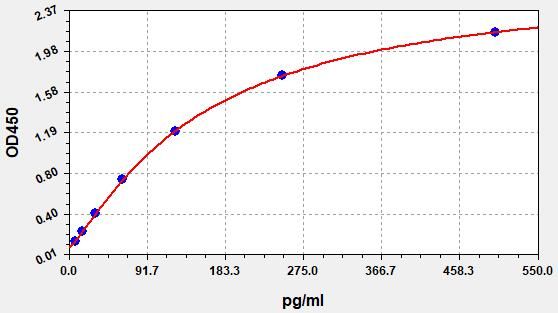
| Test Range | 7.813-500pg/ml |
| Sensitivity | 4.688pg/ml |
| Size 1 | 96T |
| Tested Applications | ELISA |
| Sample Type | Serum, Plasma, Cell Culture Supernatant, cell or tissue lysate, Other liquid samples |
| Availability | Shipped within 10-14 working days. |
| Storage | 2-8 °C for 12 months |
| UniProt ID | P18509 |
| Alias | PACAP |
| Background | Elisa kits for ADCYAP1 |
| Status | RUO |
Background
Adenylate Cyclase Activating Polypeptide 1 (ADCYAP1) is a neuropeptide that acts as a ligand for its receptor, ADCYAP1 receptor. It plays crucial roles in regulating various physiological processes, including neurotransmission, neuroprotection, and modulation of the stress response. The ADCYAP1 receptor, also known as PAC1 receptor, is widely distributed throughout the central nervous system and peripheral tissues, indicating its diverse functions. Upon binding of ADCYAP1 to its receptor, intracellular signaling pathways are activated, leading to the production of cyclic adenosine monophosphate (cAMP) and subsequent activation of protein kinase A (PKA) and other downstream effectors. This signaling cascade influences synaptic transmission, neuronal excitability, and cellular responses to stressors. Dysregulation of ADCYAP1 signaling has been implicated in various neurological and psychiatric disorders, including anxiety, depression, and neurodegenerative diseases. Understanding the mechanisms underlying ADCYAP1 receptor activation provides insights into its physiological functions and potential therapeutic targets for neurological and psychiatric disorders. Ongoing research aims to elucidate the roles of ADCYAP1 signaling in health and disease, paving the way for the development of novel treatment strategies.
Productos relacionados
Pituitary Adenylate Cyclase-Activating Polypeptide / PACAP (ADCYAP1) Antibody
ADCYAP1 is adenylate cyclase activating polypeptide 1. Mediated by adenylate cyclase activating polypeptide 1 receptors,…
Ver producto
Mouse Pituitary Adenylate Cyclase-Activating Polypeptide / PACAP (ADCYAP1) Protein
Mouse Pituitary Adenylate Cyclase-Activating Polypeptide / PACAP (ADCYAP1) is a recombinant Mouse protein expressed in E…
Ver producto
Pituitary Adenylate Cyclase-Activating Polypeptide / PACAP (ADCYAP1) Antibody
Polyclonal Antibody to Pituitary Adenylate Cyclase-Activating Polypeptide / PACAP (ADCYAP1).…
Ver producto