Fibroblast Growth Factor Receptor 2 (FGFR2) Antibody

273€ (100 µl)
Por favor contáctenos para obtener información detallada sobre el precio y disponibilidad.
Name
Fibroblast Growth Factor Receptor 2 (FGFR2) Antibody
Category
Primary Antibodies
Provider
Abbexa
Reference
abx103826
Tested Applications
WB
Description
Polyclonal Antibody to Fibroblast Growth Factor Receptor 2 (FGFR2).
Documentos del producto
Instrucciones
Data sheet
Especificaciones del producto
| Category | Primary Antibodies |
| Immunogen Target | Target: Fibroblast Growth Factor Receptor 2 (FGFR2) Immunogen: FGFR2 (Thr157-Glu377) |
| Host | Rabbit |
| Reactivity | Human |
| Recommended Dilution | WB: 0.01-2 µg/ml, IHC (Predicted): 5-20 µg/ml, IF/ICC (Predicted): 5-20 µg/ml. Optimal dilutions/concentrations should be determined by the end user. |
| Clonality | Polyclonal |
| Conjugation | Unconjugated |
| Purification | Purified by antigen-specific affinity chromatography, followed by Protein A affinity chromatography. |
| Size 1 | 100 µl |
| Size 2 | 200 µl |
| Size 3 | 1 ml |
| Form | Liquid |
| Tested Applications | WB |
| Buffer | 0.01 M PBS, pH 7.4, containing 0.05% Proclin-300, 50% glycerol. |
| Availability | Shipped within 5-7 working days. |
| Storage | Aliquot and store at -20°C. Avoid repeated freeze/thaw cycles. |
| Dry Ice | No |
| UniProt ID | P21802 |
| Alias | BEK,JWS,BBDS,CEK3,CFD1,ECT1,KGFR,TK14,TK25,BFR-1,CD332,K-SAM,Keratinocyte growth factor receptor,FGFR-2 |
| Background | Antibody anti-FGFR2 |
| Status | RUO |
| Note | THIS PRODUCT IS FOR RESEARCH USE ONLY. NOT FOR USE IN DIAGNOSTIC, THERAPEUTIC OR COSMETIC PROCEDURES. NOT FOR HUMAN OR ANIMAL CONSUMPTION. |
Background
Fibroblast growth factor receptor 2 (FGFR2) FGFR2 is a transmembrane receptor tyrosine kinase that binds fibroblast growth factors (FGFs) to regulate diverse cellular processes such as proliferation, differentiation, migration, and tissue repair. FGFR2 consists of an extracellular ligand-binding domain with three immunoglobulin-like domains, a single-pass transmembrane helix, and an intracellular tyrosine kinase domain. Ligand binding induces receptor dimerization and autophosphorylation, initiating downstream signaling cascades such as the MAPK, PI3K-AKT, and PLCγ pathways. FGFR2 is crucial in embryonic development, particularly in limb and craniofacial formation, as well as in tissue homeostasis. Mutations in FGFR2 are associated with skeletal disorders like Apert syndrome and Crouzon syndrome, which result from gain-of-function mutations leading to aberrant signaling. FGFR2 dysregulation is also implicated in cancer, particularly in breast and gastric cancers, where it promotes tumor growth, survival, and angiogenesis. Its tissue-specific splicing variants further contribute to its functional diversity across different biological contexts.
Productos relacionados
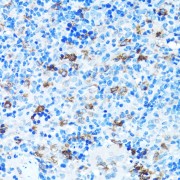
Fibroblast Growth Factor Receptor 2 (FGFR2) Antibody
FGFR2 Antibody is a Rabbit Polyclonal antibody against FGFR2. The protein encoded by this gene is a member of the fibrob…
Ver producto
Fibroblast Growth Factor Receptor 2 (FGFR2) Antibody
Rabbit polyclonal antibody against FGFR2 protein. Immunogen region is Internal.…
Ver producto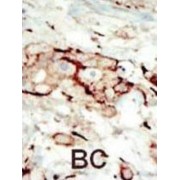
Fibroblast Growth Factor Receptor 2 (FGFR2) Antibody
FGFR2 is a member of the fibroblast growth factor receptor family, where amino acid sequence is highly conserved between…
Ver producto