Fibroblast Growth Factor 21 (FGF21) Antibody
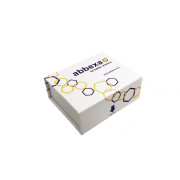
169€ (20 µg)
Por favor contáctenos para obtener información detallada sobre el precio y disponibilidad.
Name
Fibroblast Growth Factor 21 (FGF21) Antibody
Category
Primary Antibodies
Provider
Abbexa
Reference
abx109786
Tested Applications
ELISA, WB, IHC
Description
Fibroblast growth factor 21 Antibody is a Rabbit Polyclonal antibody against Fibroblast growth factor 21.
Documentos del producto
Instrucciones
Data sheet
Especificaciones del producto
| Category | Primary Antibodies |
| Immunogen Target | Target: Fibroblast Growth Factor 21 (FGF21) Immunogen: Recombinant human Fibroblast growth factor 21 protein (29-209AA). |
| Host | Rabbit |
| Reactivity | Human |
| Recommended Dilution | WB: 1/1000 - 1/5000, IHC: 1/20 - 1/200. Optimal dilutions/concentrations should be determined by the end user. |
| Clonality | Polyclonal |
| Conjugation | Unconjugated |
| Isotype | IgG |
| Purity | > 95% |
| Purification | Purified by Protein G. |
| Size 1 | 20 µg |
| Size 2 | 50 µg |
| Size 3 | 100 µg |
| Size 4 | 200 µg |
| Size 5 | 1 mg |
| Form | Liquid |
| Tested Applications | ELISA, WB, IHC |
| Buffer | 0.01 M PBS, pH 7.4, 0.03% Proclin-300 and 50% Glycerol. |
| Availability | Shipped within 5-10 working days. |
| Storage | Aliquot and store at -20°C. Avoid repeated freeze/thaw cycles. |
| Dry Ice | No |
| UniProt ID | Q9NSA1 |
| Gene ID | 26291 |
| NCBI Accession | NP_061986.1 |
| OMIM | 609436 |
| Alias | FGF-21 |
| Background | Antibody anti-FGF21 |
| Status | RUO |
| Note | THIS PRODUCT IS FOR RESEARCH USE ONLY. NOT FOR USE IN DIAGNOSTIC, THERAPEUTIC OR COSMETIC PROCEDURES. NOT FOR HUMAN OR ANIMAL CONSUMPTION. |
Background
FGF21 is a metabolic hormone belonging to the fibroblast growth factor family, primarily produced in the liver under conditions of fasting, stress, and ketogenic diet consumption. It regulates glucose metabolism, lipid homeostasis, and energy expenditure by activating FGF receptors in conjunction with the co-receptor β-Klotho. FGF21 enhances insulin sensitivity, promotes lipolysis in adipose tissue, and stimulates ketogenesis in the liver, making it a critical regulator during energy deficits. It has also been linked to reducing body weight and mitigating non-alcoholic fatty liver disease (NAFLD). Therapeutically, FGF21 analogs are being explored for treating type 2 diabetes, obesity, and metabolic disorders. Dysregulation of FGF21 has been observed in insulin resistance and cardiovascular diseases.
Productos relacionados
Fibroblast Growth Factor 21 (FGF21) Antibody
Rabbit Polyclonal against the FGF21 protein.…
Ver producto
Low Sample Volume Human Fibroblast Growth Factor 21 (FGF21) ELISA Kit
Low Sample Volume Human Fibroblast Growth Factor 21 (FGF21) ELISA Kit is an ELISA kit against Human Fibroblast Growth Fa…
Ver producto Fibroblast Growth Factor 21 (FGF21) Antibody
Polyclonal Antibody to Fibroblast Growth Factor 21 (FGF21).…
Ver producto