Complement Receptor 2 / CD21 (CR2) Antibody (Biotin)
507€ (500 µg)
Por favor contáctenos para obtener información detallada sobre el precio y disponibilidad.
Name
Complement Receptor 2 / CD21 (CR2) Antibody (Biotin)
Category
Primary Antibodies
Provider
Abbexa
Reference
abx137122
Description
Complement Receptor 2 / CD21 (CR2) Antibody is a Mouse Monoclonal antibody against Complement Receptor 2 / CD21 (CR2).
Documentos del producto
Instrucciones
Data sheet
Especificaciones del producto
| Category | Primary Antibodies |
| Immunogen Target | Target: Complement Receptor 2 / CD21 (CR2) |
| Host | Mouse |
| Reactivity | Human |
| Recommended Dilution | Optimal dilutions/concentrations should be determined by the end user. |
| Clonality | Monoclonal |
| Conjugation | Biotin |
| Isotype | IgG2a |
| Size 1 | 500 µg |
| Size 2 | 1 mg |
| Availability | Shipped within 5-10 working days. |
| Dry Ice | No |
| Alias | CR,C3DR,CD21,CVID7,SLEB9,Complement receptor type 2,Complement C3d receptor,Epstein-Barr virus receptor,EBV receptor |
| Background | Antibody anti-CR2 |
| Status | RUO |
| Note | THIS PRODUCT IS FOR RESEARCH USE ONLY. NOT FOR USE IN DIAGNOSTIC, THERAPEUTIC OR COSMETIC PROCEDURES. NOT FOR HUMAN OR ANIMAL CONSUMPTION. |
Background
CR2, also known as complement receptor type 2 (CR2) or CD21, is a crucial protein involved in the immune response, particularly in the regulation and activation of B cells and the complement system. It serves as a receptor for fragments of complement component C3, specifically C3d, C3dg, and iC3b, which are breakdown products of C3b, an integral part of the complement system. By binding these complement fragments, CR2 plays a key role in amplifying the immune response and facilitating interactions between the innate and adaptive arms of the immune system. CR2 is predominantly expressed on the surface of B lymphocytes, follicular dendritic cells, and some epithelial cells. Its most well-known function is to enhance B-cell activation by linking the complement system to the B-cell receptor (BCR) signaling pathway. This enhances B-cell sensitivity to antigens, especially during the formation of immunological memory.
Productos relacionados
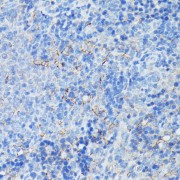
Complement Receptor 2 / CD21 (CR2) Antibody
CR2 Antibody is a Rabbit Polyclonal Antibody against CR2.…
Ver producto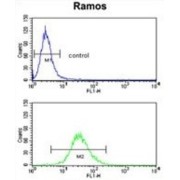
Complement Receptor 2 / CD21 (CR2) Antibody
CR2 is a membrane protein, which functions as a receptor for Epstein-Barr virus (EBV) binding on B and T lymphocytes.…
Ver producto
Mouse Complement Receptor 2 / CD21 (CR2) Protein
Mouse Complement Receptor 2 (CR2) is a recombinant Mouse protein expressed in E. coli.…
Ver producto