C-Type Lectin Domain Family 9 Member A (CLEC9A) Antibody

377€ (100 µg)
Por favor contáctenos para obtener información detallada sobre el precio y disponibilidad.
Name
C-Type Lectin Domain Family 9 Member A (CLEC9A) Antibody
Category
Primary Antibodies
Provider
Abbexa
Reference
abx231758
Tested Applications
ELISA, IHC
Description
CLEC9A Antibody is a Rabbit Polyclonal against CLEC9A.
Documentos del producto
Instrucciones
Data sheet
Especificaciones del producto
| Category | Primary Antibodies |
| Immunogen Target | Target: C-Type Lectin Domain Family 9 Member A (CLEC9A) Immunogen: C-type lectin domain family 9, member A |
| Host | Rabbit |
| Reactivity | Human |
| Assay Type | Concentration: 2 mg/ml |
| Recommended Dilution | IHC: 1/50 - 1/200. Optimal dilutions/concentrations should be determined by the end user. |
| Clonality | Polyclonal |
| Conjugation | Unconjugated |
| Isotype | IgG |
| Observed MW | Observed MW: 27 kDa |
| Purity | ≥ 95% (SDS-PAGE) |
| Purification | Purified by immunogen affinity chromatography. |
| Size 1 | 100 µg |
| Form | Liquid |
| Tested Applications | ELISA, IHC |
| Buffer | PBS, pH 7.3, with 0.02% sodium azide and 50% glycerol. |
| Availability | Shipped within 5-12 working days. |
| Storage | Aliquot and store at -20°C. Avoid repeated freeze/thaw cycles. |
| Dry Ice | No |
| UniProt ID | Q6UXN8 |
| Gene ID | 283420 |
| OMIM | 612252 |
| Alias | CD370,DNGR1,DNGR-1, |
| Background | Antibody anti-CLEC9A |
| Status | RUO |
| Note | THIS PRODUCT IS FOR RESEARCH USE ONLY. NOT FOR USE IN DIAGNOSTIC, THERAPEUTIC OR COSMETIC PROCEDURES. NOT FOR HUMAN OR ANIMAL CONSUMPTION. |
Background
CLEC9A, also known as C-type lectin domain family 9 member A or DNGR-1 (Dendritic Cell Natural Killer Lectin Group Receptor 1), is an immune receptor primarily expressed on a subset of dendritic cells (DCs) and certain populations of macrophages. CLEC9A is part of the C-type lectin receptor (CLR) family, which is known for its role in recognizing carbohydrate structures on pathogens, triggering immune responses, and presenting antigens to T cells. However, CLEC9A is unique within this family for its specialized function in detecting necrotic cells and facilitating the cross-presentation of antigens from dead cells. This capability enables CLEC9A to bridge innate and adaptive immunity, playing a significant role in immune responses to infections, cancer, and tissue injury.The receptor's ability to recognize damaged cells, rather than simply pathogens, underscores its importance in contexts such as infection, cancer immunology, and autoimmunity. CLEC9A has therefore gained interest for its potential applications in vaccine development and immunotherapy. Its expression is mainly restricted to CD8+ DCs and their human equivalent, BDCA3+ DCs, which are specialized for cross-presentation, making CLEC9A a critical component in inducing CD8+ T cell responses.
Productos relacionados
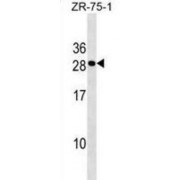
C-Type Lectin Domain Family 9 Member A (CLEC9A) Antibody
CLEC9A is a group V C-type lectin-like receptor (CTLR) that functions as an activation receptor and is expressed on myel…
Ver producto
C-type lectin domain containing 9A (CD370) Antibody (PE)
C-type lectin domain containing 9A (CD370) Antibody (PE) is a Mouse Monoclonal against C-type lectin domain containing 9…
Ver producto C-Type Lectin Domain Family 9 Member A (CLEC9A) Antibody
C-Type Lectin Domain Family 9 Member A (CLEC9A) Antibody is a Mouse Monoclonal against C-Type Lectin Domain Family 9 Mem…
Ver producto