CD209 Antigen (CD209) Antibody
292.5€ (80 µl)
Por favor contáctenos para obtener información detallada sobre el precio y disponibilidad.
Name
CD209 Antigen (CD209) Antibody
Category
Primary Antibodies
Provider
Abbexa
Reference
abx034379
Tested Applications
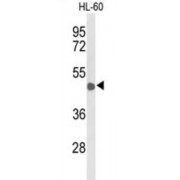
ELISA, WB
Description
CD209 encodes a transmembrane receptor and is often referred to as DC-SIGN because of its expression on the surface of dendritic cells and macrophages. The encoded protein is involved in the innate immune system and recognizes numerous evolutionarily divergent pathogens ranging from parasites to viruses with a large impact on public health. The protein is organized into three distinct domains: an N-terminal transmembrane domain, a tandem-repeat neck domain and C-type lectin carbohydrate recognition domain. The extracellular region consisting of the C-type lectin and neck domains has a dual function as a pathogen recognition receptor and a cell adhesion receptor by binding carbohydrate ligands on the surface of microbes and endogenous cells. The neck region is important for homo-oligomerization which allows the receptor to bind multivalent ligands with high avidity. Variations in the number of 23 amino acid repeats in the neck domain of this protein are rare but have a significant impact on ligand binding ability. This gene is closely related in terms of both sequence and function to a neighboring gene (GeneID 10332; often referred to as L-SIGN). DC-SIGN and L-SIGN differ in their ligand-binding properties and distribution.
Documentos del producto
Instrucciones
Data sheet
Especificaciones del producto
| Category | Primary Antibodies |
| Immunogen Target | Target: CD209 Antigen (CD209) Immunogen: KLH-conjugated synthetic peptide between 330-355 amino acids from the Central region of human CD209. |
| Host | Rabbit |
| Reactivity | Human |
| Recommended Dilution | WB: 1/1000. Optimal dilutions/concentrations should be determined by the end user. |
| Clonality | Polyclonal |
| Conjugation | Unconjugated |
| Isotype | IgG |
| Observed MW | Calculated MW: 45.8 kDa |
| Purification | Purified through a protein A column, followed by peptide affinity purification. |
| Size 1 | 80 µl |
| Size 2 | 400 µl |
| Form | Liquid |
| Tested Applications | ELISA, WB |
| Buffer | PBS containing 0.09% sodium azide. |
| Availability | Shipped within 5-10 working days. |
| Storage | Aliquot and store at -20°C. Avoid repeated freeze/thaw cycles. |
| Dry Ice | No |
| UniProt ID | Q9NNX6 |
| Alias | C-type lectin domain family 4 member L,CDSIGN,CLEC4L,DC-SIGN,DC-SIGN1,hDC-SIGN,Dendritic cell-specific ICAM-3-grabbing non-integrin 1,CD209 antigen |
| Background | Antibody anti-CD209 |
| Status | RUO |
| Note | THIS PRODUCT IS FOR RESEARCH USE ONLY. NOT FOR USE IN DIAGNOSTIC, THERAPEUTIC OR COSMETIC PROCEDURES. NOT FOR HUMAN OR ANIMAL CONSUMPTION. |
Background
CD209, commonly known as DC-SIGN (Dendritic Cell-Specific Intercellular adhesion molecule-3-Grabbing Non-integrin), is a type II transmembrane protein receptor primarily expressed on the surface of dendritic cells (DCs) and some macrophage subsets. It plays a crucial role in the immune system by mediating pathogen recognition, cellular adhesion, and antigen capture. CD209 is a member of the C-type lectin receptor (CLR) family and exhibits high affinity for mannose-rich glycans, a feature that enables it to bind to a range of microbial structures, facilitating the immune response against pathogens. One of CD209's defining characteristics is its ability to recognize pathogen-associated molecular patterns (PAMPs), which are specific carbohydrate patterns on pathogens. By binding to these patterns, CD209 captures and internalizes pathogens, aiding in their processing and subsequent antigen presentation to T cells. The receptor is particularly relevant in the context of HIV, Mycobacterium tuberculosis, Ebola, and Dengue virus, as it can interact with these pathogens and contribute to their immune response or facilitate viral entry in certain cases.
Productos relacionados
CD209 Antigen (CD209) Antibody
CD209 encodes a transmembrane receptor and is often referred to as DC-SIGN because of its expression on the surface of d…
Ver producto
C-Type Lectin Domain Family 4, Member L (CLEC4L) Antibody
CLEC4L Antibody is a Rabbit Polyclonal against CLEC4L.…
Ver producto
C-Type Lectin Domain Family 4, Member L (CLEC4L) Antibody
CLEC4L Antibody is a Rabbit Polyclonal against CLEC4L.…
Ver producto