TREM1 antibody

Contáctenos para saber el precio
Por favor contáctenos para obtener información detallada sobre el precio y disponibilidad.
Name
TREM1 antibody
Category
Primary Antibodies
Provider
FineTest
Reference
FNab09969
Tested Applications
ELISA, WB
Description
Stimulates neutrophil and monocyte-mediated inflammatory responses. Triggers release of pro-inflammatory chemokines and cytokines, as well as increased surface expression of cell activation markers. Amplifier of inflammatory responses that are triggered by bacterial and fungal infections and is a crucial mediator of septic shock.
Documentos del producto
Especificaciones del producto
| Category | Primary Antibodies |
| Immunogen Target | triggering receptor expressed on myeloid cells 1 (TREM1) |
| Host | Rabbit |
| Reactivity | Human, Rat |
| Recommended Dilution | WB: 1:500-1:2000 |
| Clonality | polyclonal |
| Conjugation | Unconjugated |
| Isotype | IgG |
| Observed MW | 30 kDa |
| Purity | ≥95% as determined by SDS-PAGE |
| Purification | Immunogen affinity purified |
| Size 1 | 100µg |
| Form | liquid |
| Tested Applications | ELISA, WB |
| Storage | PBS with 0.02% sodium azide and 50% glycerol pH 7.3, -20℃ for 12 months(Avoid repeated freeze / thaw cycles.) |
| UniProt ID | Q9NP99 |
| Gene ID | 54210 |
| Alias | Triggering receptor expressed on monocytes 1,CD354,TREM-1 |
| Background | Antibody anti-TREM1 |
| Status | RUO |
| Note | Mol. Weight 30 kDa |
Background
Triggering receptor expressed on myeloid cells 1 (TREM1) is an immunoglobulin (Ig) superfamily receptor predominantly expressed on myeloid cells, such as neutrophils, monocytes, macrophages, and dendritic cells. TREM1 is recognized for its role in amplifying inflammatory responses during infections and other inflammatory conditions, and it plays a significant part in innate immune regulation. TREM1 is a potent activator of inflammatory responses and is known to amplify signaling from pattern recognition receptors (PRRs) such as toll-like receptors (TLRs). Through these amplifying actions, TREM1 enhances the immune system’s ability to clear pathogens but also has the potential to contribute to pathological inflammation. Triggering receptor expressed on myeloid cells 1 (TREM1) is an immunoglobulin (Ig) superfamily receptor predominantly expressed on myeloid cells, such as neutrophils, monocytes, macrophages, and dendritic cells. TREM1 is recognized for its role in amplifying inflammatory responses during infections and other inflammatory conditions, and it plays a significant part in innate immune regulation. TREM1 is a potent activator of inflammatory responses and is known to amplify signaling from pattern recognition receptors (PRRs) such as toll-like receptors (TLRs). Through these amplifying actions, TREM1 enhances the immune system’s ability to clear pathogens but also has the potential to contribute to pathological inflammation. TREM1 activation is linked with inflammatory cytokine production, chemotaxis, and cellular responses involved in pathogen clearance. In addition to pathogen responses, TREM1 is implicated in sterile inflammation, where it is upregulated during non-infectious inflammation, such as that observed in autoimmune diseases, cancer, and tissue damage. Its role in amplifying inflammatory cascades makes TREM1 a focal point for research into immune regulation and as a therapeutic target for controlling inflammation-related diseases.
Productos relacionados

Triggering Receptor Expressed On Myeloid Cells 1 (TREM1) Antibody
TREM1 Antibody is a Rabbit Polyclonal antibody against TREM1. This gene encodes a receptor belonging to the Ig superfami…
Ver producto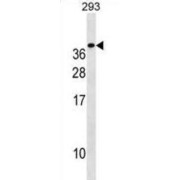
Triggering Receptor Expressed On Myeloid Cells 1 (TREM1) Antibody
Monocyte/macrophage and neutrophil-mediated inflammatory responses can be stimulated through a variety of receptors, inc…
Ver producto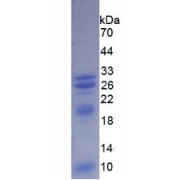
Human Triggering Receptor Expressed On Myeloid Cells 1 (TREM1) Protein
Human Triggering Receptor Expressed On Myeloid Cells 1 (TREM1) is a recombinant Human protein expressed in E. coli.…
Ver producto