Alpha-1-Antitrypsin (SERPINA1) Antibody
286€ (50 tests)
Por favor contáctenos para obtener información detallada sobre el precio y disponibilidad.
Name
Alpha-1-Antitrypsin (SERPINA1) Antibody
Category
Primary Antibodies
Provider
Abbexa
Reference
abx275064
Tested Applications
FCM
Description
This product is currently in development. The lead time for this product may be several months. Please contact us at
Documentos del producto
Instrucciones
Data sheet
Especificaciones del producto
| Category | Primary Antibodies |
| Immunogen Target | Target: Alpha-1-Antitrypsin (SERPINA1) |
| Host | Rabbit |
| Reactivity | Human |
| Recommended Dilution | WB: 0.2-2 µg/ml, IHC: 5-20 µg/ml, IF/ICC: 5-20 µg/ml, FCM: 10 µg/ml. Optimal dilutions/concentrations should be determined by the end user. |
| Clonality | Monoclonal |
| Conjugation | Unconjugated |
| Isotype | IgG |
| Purification | Purified by Protein A and Protein G affinity chromatography. |
| Size 1 | 50 tests |
| Size 2 | 100 tests |
| Size 3 | 200 tests |
| Size 4 | 500 tests |
| Form | Liquid |
| Tested Applications | FCM |
| Buffer | PBS, pH 7.4, containing 0.02% NaN3, 50% glycerol. |
| Availability | Please enquire. |
| Storage | Aliquot and store at -20°C. Avoid repeated freeze/thaw cycles. |
| Dry Ice | No |
| UniProt ID | P01009 |
| Gene ID | 5265 |
| Background | Antibody anti-SERPINA1 |
| Status | RUO |
| Note | THIS PRODUCT IS FOR RESEARCH USE ONLY. NOT FOR USE IN DIAGNOSTIC, THERAPEUTIC OR COSMETIC PROCEDURES. NOT FOR HUMAN OR ANIMAL CONSUMPTION. |
Productos relacionados

Alpha-1-Antitrypsin (SERPINA1) Antibody
SERPINA1 Antibody is a Rabbit Polyclonal antibody against SERPINA1. The protein encoded by this gene is secreted and is …
Ver producto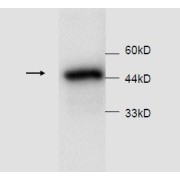
Alpha-1-Antitrypsin (SERPINA1) Antibody
A1AT Antibody is a Mouse Monoclonal antibody against A1AT.…
Ver producto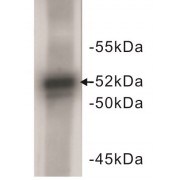
alpha 1-Antitrypsin (SERPINA1) Antibody
alpha 1-antitrypsin, A1AT Antibody is a Rabbit Polyclonal antibody against Human.…
Ver producto