Vascular endothelial growth factor receptor 1 (FLT1) Antibody
221€ (50 µg)
Por favor contáctenos para obtener información detallada sobre el precio y disponibilidad.
Name
Vascular endothelial growth factor receptor 1 (FLT1) Antibody
Category
Primary Antibodies
Provider
Abbexa
Reference
abx326471
Tested Applications
ELISA, WB, IHC
Description
FLT1 Antibody is a Rabbit Polyclonal against FLT1.
Documentos del producto
Instrucciones
Data sheet
Especificaciones del producto
| Category | Primary Antibodies |
| Immunogen Target | Target: Vascular endothelial growth factor receptor 1 (FLT1) Immunogen: Synthesized peptide derived from human Flt-1 around the non-phosphorylation site of Y1048. |
| Host | Rabbit |
| Reactivity | Human, Mouse, Rat |
| Recommended Dilution | ELISA: 1/10000, IHC: 1/100 - 1/300. Optimal dilutions/concentrations should be determined by the end user. |
| Clonality | Polyclonal |
| Conjugation | Unconjugated |
| Isotype | IgG |
| Purification | Purified by affinity chromatography. |
| Size 1 | 50 µg |
| Size 2 | 100 µg |
| Form | Liquid |
| Tested Applications | ELISA, WB, IHC |
| Buffer | PBS containing 50% glycerol, 0.5% BSA and 0.02% sodium azide. |
| Availability | Shipped within 5-10 working days. |
| Storage | Aliquot and store at -20°C. Avoid repeated freeze/thaw cycles. |
| Dry Ice | No |
| UniProt ID | P17948 |
| Gene ID | 2321 |
| Alias | FLT,FLT-1,VEGFR1,VEGFR-1,Vascular permeability factor receptor,Fms-like tyrosine kinase 1,Vascular endothelial growth factor receptor 1 |
| Background | Antibody anti-FLT1 |
| Status | RUO |
| Note | THIS PRODUCT IS FOR RESEARCH USE ONLY. NOT FOR USE IN DIAGNOSTIC, THERAPEUTIC OR COSMETIC PROCEDURES. NOT FOR HUMAN OR ANIMAL CONSUMPTION. |
Background
Fms related receptor tyrosine kinase 1 (FLT1) FLT1, also known as vascular endothelial growth factor receptor 1 (VEGFR1), is a transmembrane tyrosine kinase receptor that binds vascular endothelial growth factors (VEGFs) and placental growth factor (PlGF). FLT1 plays a crucial role in angiogenesis, vascular development, and inflammation by regulating endothelial cell proliferation, migration, and survival. Structurally, FLT1 consists of an extracellular ligand-binding domain with seven immunoglobulin-like loops, a transmembrane domain, and an intracellular kinase domain. FLT1 can function as a signaling receptor or a decoy receptor, depending on its membrane-bound or soluble isoforms, modulating VEGF availability and signaling intensity. It is highly expressed in endothelial cells and trophoblasts, contributing to processes such as placental development and vascular remodeling. Dysregulation of FLT1 is implicated in pathological conditions, including cancer, where it promotes tumor angiogenesis, and preeclampsia, where excessive FLT1 activity leads to impaired placental and vascular function. Its dual role as a regulator of VEGF signaling and a therapeutic target underscores its importance in both physiological and pathological angiogenesis.
Productos relacionados

Vascular Endothelial Growth Factor Receptor 1 (FLT1) Antibody
FLT1 Antibody is a Rabbit Polyclonal antibody against FLT1. This gene encodes a member of the vascular endothelial growt…
Ver producto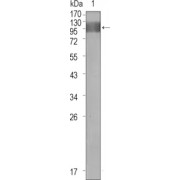
Vascular Endothelial Growth Factor Receptor 1 (FLT1) Antibody
Oncogene FLT belongs to the src gene family and is related to oncogene ROS (MIM 165020). Like other members of this fami…
Ver producto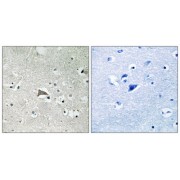
Vascular Endothelial Growth Factor Receptor 1 / VEGFR1 (FLT1) Antibody
Rabbit polyclonal antibody against Vascular Endothelial Growth Factor Receptor 1 / VEGFR1 (FLT1) protein. Immunogen regi…
Ver producto