Sialic Acid Binding Ig Like Lectin 14 (SIGLEC14) Antibody
292.5€ (80 µl)
Por favor contáctenos para obtener información detallada sobre el precio y disponibilidad.
Name
Sialic Acid Binding Ig Like Lectin 14 (SIGLEC14) Antibody
Category
Primary Antibodies
Provider
Abbexa
Reference
abx028785
Tested Applications
ELISA, WB
Description
Putative adhesion molecule. Sialic acid-binding paired receptor which may activate associated receptors.
Documentos del producto
Instrucciones
Data sheet
Especificaciones del producto
| Category | Primary Antibodies |
| Immunogen Target | Target: Sialic Acid Binding Ig Like Lectin 14 (SIGLEC14) Immunogen: KLH-conjugated synthetic peptide between 60-89 amino acids from the N-terminal region of human SIGLEC14. |
| Host | Rabbit |
| Reactivity | Human |
| Recommended Dilution | WB: 1/1000. Optimal dilutions/concentrations should be determined by the end user. |
| Clonality | Polyclonal |
| Conjugation | Unconjugated |
| Isotype | IgG |
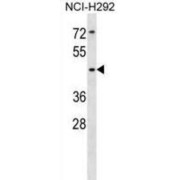
| Observed MW | Calculated MW: 44 kDa |
| Purification | Purified through a protein A column, followed by peptide affinity purification. |
| Size 1 | 80 µl |
| Size 2 | 400 µl |
| Form | Liquid |
| Tested Applications | ELISA, WB |
| Buffer | PBS containing 0.09% sodium azide. |
| Availability | Shipped within 5-10 working days. |
| Storage | Aliquot and store at -20°C. Avoid repeated freeze/thaw cycles. |
| Dry Ice | No |
| UniProt ID | Q08ET2 |
| Alias | Siglec-14 |
| Background | Antibody anti-SIGLEC14 |
| Status | RUO |
| Note | THIS PRODUCT IS FOR RESEARCH USE ONLY. NOT FOR USE IN DIAGNOSTIC, THERAPEUTIC OR COSMETIC PROCEDURES. NOT FOR HUMAN OR ANIMAL CONSUMPTION. |
Background
SIGLEC14 is a member of the Siglec family expressed on myeloid cells, including monocytes and neutrophils. It is paired with SIGLEC5, with which it shares high sequence similarity, forming an activating counterpart to the inhibitory SIGLEC5. SIGLEC14 binds to sialic acid-containing glycans on pathogens and self-tissues, triggering pro-inflammatory responses. This protein has been implicated in innate immune activation, particularly in recognizing bacterial infections. SIGLEC14 also plays a role in the modulation of immune responses, balancing activation and tolerance. Genetic variations in SIGLEC14 can result in a fusion with SIGLEC5, altering its expression and immune function.