Rhodopsin (RHO) Antibody
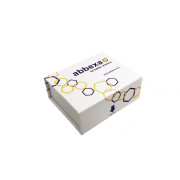
221€ (50 µg)
Por favor contáctenos para obtener información detallada sobre el precio y disponibilidad.
Name
Rhodopsin (RHO) Antibody
Category
Primary Antibodies
Provider
Abbexa
Reference
abx329070
Tested Applications
ELISA, WB, IHC
Description
RHO Antibody is a Rabbit Polyclonal against RHO.
Documentos del producto
Instrucciones
Data sheet
Especificaciones del producto
| Category | Primary Antibodies |
| Immunogen Target | Target: Rhodopsin (RHO) Immunogen: Synthesized peptide derived from human Rhodopsin around the non-phosphorylation site of S334. |
| Host | Rabbit |
| Reactivity | Human, Mouse, Rat |
| Recommended Dilution | ELISA: 1/5000, WB: 1/500 - 1/2000, IHC: 1/100 - 1/300. Optimal dilutions/concentrations should be determined by the end user. |
| Clonality | Polyclonal |
| Conjugation | Unconjugated |
| Isotype | IgG |
| Purification | Purified by affinity chromatography. |
| Size 1 | 50 µg |
| Size 2 | 100 µg |
| Form | Liquid |
| Tested Applications | ELISA, WB, IHC |
| Buffer | PBS containing 50% glycerol, 0.5% BSA and 0.02% sodium azide. |
| Availability | Shipped within 5-10 working days. |
| Storage | Aliquot and store at -20°C. Avoid repeated freeze/thaw cycles. |
| Dry Ice | No |
| UniProt ID | P08100 |
| Gene ID | 6010 |
| Alias | RHO,RP4,OPN2,CSNBAD1 |
| Background | Antibody anti-RHO |
| Status | RUO |
| Note | THIS PRODUCT IS FOR RESEARCH USE ONLY. NOT FOR USE IN DIAGNOSTIC, THERAPEUTIC OR COSMETIC PROCEDURES. NOT FOR HUMAN OR ANIMAL CONSUMPTION. |
Background
Rhodopsin (RHO) is a light-sensitive G protein-coupled receptor found in the rod cells of the retina, which plays a crucial role in vision, especially in low-light conditions. It is composed of the protein opsin and a retinal chromophore. When light hits rhodopsin, the retinal undergoes a conformational change, activating the opsin and initiating a signaling cascade that results in hyperpolarization of the rod cell and the transmission of visual signals to the brain. Rhodopsin is highly sensitive to light, making it essential for scotopic vision, or vision in dim light. Mutations in the RHO gene can lead to various retinal diseases, including retinitis pigmentosa, which causes progressive vision loss and, eventually, blindness. Research into rhodopsin and its mechanisms is important for understanding retinal diseases and developing potential therapies to treat them, including gene therapies and pharmacological interventions to restore or protect vision.
Productos relacionados

Rhodopsin (RHO) Antibody
Rabbit polyclonal antibody against RHO protein. Immunogen region is Internal.…
Ver producto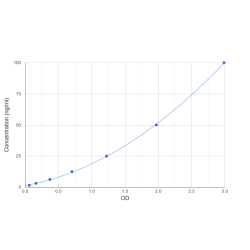
Human Rhodopsin (RHO) ELISA Kit
Human Rhodopsin (RHO) ELISA Kit is an ELISA Kit for the in vitro quantitative measurement of Human Rhodopsin concentrati…
Ver producto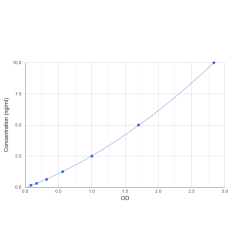
Mouse Rhodopsin (RHO) ELISA Kit
Mouse Rhodopsin (RHO) ELISA Kit is an ELISA Kit for the in vitro quantitative measurement of Mouse Rhodopsin concentrati…
Ver producto