Rat Epithelial Cell Adhesion Molecule (EPCAM) Protein
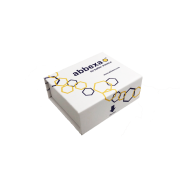
1118€ (100 µg)
Por favor contáctenos para obtener información detallada sobre el precio y disponibilidad.
Name
Rat Epithelial Cell Adhesion Molecule (EPCAM) Protein
Category
Proteins and Peptides
Provider
Abbexa
Reference
abx692207
Tested Applications
SDS-PAGE
Description
Epithelial Cell Adhesion Molecule (EPCAM) protein is a recombinant Rat protein expressed in HEK293 cells.
Documentos del producto
Instrucciones
Data sheet
Especificaciones del producto
| Category | Proteins and Peptides |
| Immunogen Target | Epithelial Cell Adhesion Molecule (EPCAM) |
| Host | HEK293 cells |
| Assay Type | Activity: Not tested Sequence Fragment: Met1-Thr266 Tag: C-terminal His tag |
| Origin | Rat |
| Observed MW | 29.2 kDa |
| Expression | Recombinant |
| Purity | > 97% (SDS-PAGE) |
| Size 1 | 100 µg |
| Form | Lyophilized |
| Tested Applications | SDS-PAGE |
| Buffer | Prior to lyophilization: Sterile PBS, pH 7.4. |
| Availability | Shipped within 5-15 working days. |
| Storage | Storage: Store lyophilized between -20 °C and -80°C. Stability: Stable when stored reconstituted at 2-8°C for up to 1 week. Reconstituted aliquots are stable at -20°C for up to 3 months. Shelf Life: 12 months. |
| Dry Ice | No |
| UniProt ID | O55159 |
| Alias | ESA,KSA,M4S1,MK-1,DIAR5,EGP-2,EGP40,KS1/4,MIC18,TROP1,TACSTD1,Ep-CAM,Adenocarcinoma-associated antigen,Cell surface glycoprotein Trop-1,Epithelial cell surface antigen |
| Background | Protein EPCAM |
| Status | RUO |
| Note | THIS PRODUCT IS FOR RESEARCH USE ONLY. NOT FOR USE IN DIAGNOSTIC, THERAPEUTIC OR COSMETIC PROCEDURES. NOT FOR HUMAN OR ANIMAL CONSUMPTION. Endotoxin Level: < 1.0 EU per µg (LAL method). |
Background
Epithelial Cell Adhesion Molecule (EPCAM) , also known as CD326 or TACSTD1 (tumor-associated calcium signal transducer 1), is a transmembrane glycoprotein prominently expressed on the surface of epithelial cells in various tissues. EpCAM plays a dual role in cellular adhesion and signaling, as well as in the regulation of cell proliferation and differentiation. Originally identified as a marker on cancer cells, EpCAM is also a vital component in normal epithelial physiology, where it participates in maintaining cell-cell adhesion and the structural integrity of epithelial layers. EpCAM has become a major focus in cancer research due to its high expression in numerous epithelial tumors, including colorectal, breast, lung, and ovarian cancers. It is frequently upregulated in cancer, where it contributes to cell proliferation, migration, and invasion, as well as tumor growth and metastasis. Its presence on circulating tumor cells has made EpCAM a promising biomarker for early cancer detection and prognosis. Beyond its role in oncogenesis, EpCAM is involved in regenerative processes in epithelial tissues, influencing stem cell behavior and tissue repair.
Productos relacionados
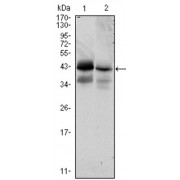
Epithelial Cell Adhesion Molecule (EPCAM) Antibody
This 9-exon gene encodes a carcinoma-associated antigen and is a member of a family that includes at least two type I me…
Ver producto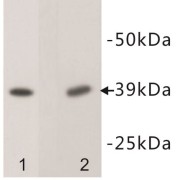
Epithelial Cell Adhesion Molecule (EPCAM) Antibody
Epithelial Cell Adhesion Molecule (EPCAM) Antibody is a Mouse Monoclonal antibody against Epithelial Cell Adhesion Molec…
Ver producto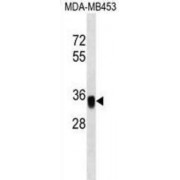
Epithelial Cell Adhesion Molecule (EPCAM) Antibody
This gene encodes a carcinoma-associated antigen and is a member of a family that includes at least two type I membrane …
Ver producto