Pig Tumor Necrosis Factor (TNF) Protein
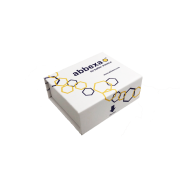
351€ (5 µg)
Por favor contáctenos para obtener información detallada sobre el precio y disponibilidad.
Name
Pig Tumor Necrosis Factor (TNF) Protein
Category
Proteins and Peptides
Provider
Abbexa
Reference
abx670321
Tested Applications
ELISA, WB
Description
Pig Tumor Necrosis Factor (TNF) Protein is a Recombinant protein expressed in Pichia pastoris.
Documentos del producto
Instrucciones
Data sheet
Especificaciones del producto
| Category | Proteins and Peptides |
| Immunogen Target | Tumor Necrosis Factor (TNF) |
| Host | Yeast |
| Assay Type | Activity: Not tested Sequence Fragment: 77-232 AA |
| Recommended Dilution | Optimal dilutions/concentrations should be determined by the end user. |
| Origin | Pig |
| Conjugation | Unconjugated |
| Observed MW | 16.9 kDa |
| Expression | Recombinant |
| Purity | > 95% (SDS-PAGE) |
| Purification | Purified by ion-exchange chromatography. |
| Size 1 | 5 µg |
| Form | Lyophilized |
| Tested Applications | ELISA, WB |
| Buffer | Prior to lyophilization: Phosphate buffered saline, 10% Trehalose. |
| Availability | Shipped within 3-7 working days. |
| Storage | Store lyophilized at -20 °C. After reconstitution, aliquot and store at -20 °C. Avoid repeated freeze/thaw cycles. |
| Dry Ice | No |
| UniProt ID | P23563 |
| Gene ID | 397086 |
| Alias | TNF,DIF,TNF-alpha,TNFA,TNFSF2,Tumour necrosis factor,TNF-α,TNLG1F,Tumor necrosis factor alpha, Cachectin |
| Background | Protein TNF |
| Status | RUO |
| Note | THIS PRODUCT IS FOR RESEARCH USE ONLY. NOT FOR USE IN DIAGNOSTIC, THERAPEUTIC OR COSMETIC PROCEDURES. NOT FOR HUMAN OR ANIMAL CONSUMPTION. Reconstitute in 20 µl sterile PBS containing 0.1% carrier protein. Care should be taken during reconstitution as the protein may appear as a film at the bottom of the vial. Gently mix after reconstitution. |
Background
Tumor Necrosis Factor (TNF) is a versatile cytokine involvedl in numerous physiological and pathological processes. It holds a critical role in modulating immune responses, inflammation, and apoptosis. While predominantly produced by activated macrophages, TNF can also originate from various cell types like lymphocytes, mast cells, endothelial cells, and fibroblasts. Two well-known forms of TNF are TNF-alpha and TNF-beta, also referred to as lymphotoxin-alpha. TNF-alpha, being extensively studied, exists in both soluble and membrane-bound forms, both capable of initiating biological responses by binding to their respective receptors. TNF signaling operates through two receptors: TNFR1 and TNFR2. TNFR1 is ubiquitously expressed across cell types, whereas TNFR2 is primarily found in endothelial, epithelial, and certain immune cells. TNFR1 signaling typically triggers pro-inflammatory and apoptotic responses, while TNFR2 signaling exhibits anti-inflammatory properties and fosters cell proliferation. In autoimmune disease treatment, suppressing TNFR1 signaling has proved significant, whereas TNFR2 signaling supports wound healing.The primary function of TNF lies in regulating immune cells
Productos relacionados
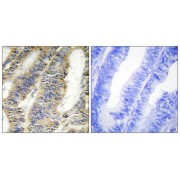
Tumor Necrosis Factor (TNF) Antibody
Rabbit polyclonal antibody against Tumor Necrosis Factor protein. Immunogen region is Internal.…
Ver producto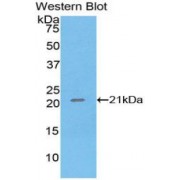
Tumor Necrosis Factor (TNF) Antibody
Polyclonal Antibody to Tumor Necrosis Factor (Tumor Necrosis Factor).…
Ver producto
Rabbit Tumor Necrosis Factor (TNF) CLIA Kit
Rabbit Tumor Necrosis Factor (TNF) Chemiluminescent Immunoassay (CLIA) Kit is a Sandwich Chemiluminescent Immunoassay (C…
Ver producto