Paired Box 3 (PAX3) Antibody
377€ (100 µg)
Por favor contáctenos para obtener información detallada sobre el precio y disponibilidad.
Name
Paired Box 3 (PAX3) Antibody
Category
Primary Antibodies
Provider
Abbexa
Reference
abx236169
Tested Applications
ELISA, WB, IP
Description
PAX3 Antibody is a Rabbit Polyclonal against PAX3.
Documentos del producto
Instrucciones
Data sheet
Especificaciones del producto
| Category | Primary Antibodies |
| Immunogen Target | Target: Paired Box 3 (PAX3) Immunogen: paired box 3 |
| Host | Rabbit |
| Reactivity | Human, Mouse, Rat |
| Assay Type | Concentration: 2 mg/ml |
| Recommended Dilution | WB: 1/500 - 1/2000, IP: 1/500 - 1/1000. Optimal dilutions/concentrations should be determined by the end user. |
| Clonality | Polyclonal |
| Conjugation | Unconjugated |
| Isotype | IgG |
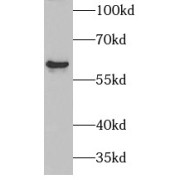
| Observed MW | Observed MW: 60 kDa |
| Purity | ≥ 95% (SDS-PAGE) |
| Purification | Purified by immunogen affinity chromatography. |
| Size 1 | 100 µg |
| Form | Liquid |
| Tested Applications | ELISA, WB, IP |
| Buffer | PBS, pH 7.3, with 0.02% sodium azide and 50% glycerol. |
| Availability | Shipped within 5-12 working days. |
| Storage | Aliquot and store at -20°C. Avoid repeated freeze/thaw cycles. |
| Dry Ice | No |
| UniProt ID | P23760 |
| Gene ID | 5077 |
| OMIM | 122880 |
| Alias | CDHS,HUP2,PAX-3,WS1,WS3 |
| Background | Antibody anti-PAX3 |
| Status | RUO |
| Note | THIS PRODUCT IS FOR RESEARCH USE ONLY. NOT FOR USE IN DIAGNOSTIC, THERAPEUTIC OR COSMETIC PROCEDURES. NOT FOR HUMAN OR ANIMAL CONSUMPTION. |
Background
PAX3 is a transcription factor belonging to the paired box (PAX) family, essential for embryonic development, particularly in neural crest cell migration, muscle formation, and melanocyte differentiation. PAX3 regulates genes involved in cell survival, proliferation, and lineage determination during development of the neural tube, skeletal muscles, and craniofacial structures. Mutations in PAX3 are associated with Waardenburg syndrome types I and III, characterized by hearing loss, pigmentation abnormalities, and skeletal defects due to impaired neural crest development. PAX3 also plays a role in myogenesis by activating MyoD and other myogenic regulatory factors. In cancers like alveolar rhabdomyosarcoma, chromosomal translocations involving PAX3 result in oncogenic fusion proteins (e.g., PAX3-FOXO1) that drive tumorigenesis by promoting unchecked proliferation and inhibiting differentiation. Knockout models show defects in neural crest migration, craniofacial anomalies, and muscle development failures, emphasizing PAX3's role in embryonic tissue patterning and organogenesis.