Mouse Glucose Transporter 4 / GLUT4 (SLC2A4) Protein

208€ (10 µg)
Por favor contáctenos para obtener información detallada sobre el precio y disponibilidad.
Name
Mouse Glucose Transporter 4 / GLUT4 (SLC2A4) Protein
Category
Proteins and Peptides
Provider
Abbexa
Reference
abx653546
Tested Applications
WB, SDS-PAGE
Description
Solute Carrier Family 2, Facilitated Glucose Transporter Member 4 / GLUT4 (SLC2A4) Protein is a recombinant Mouse protein expressed in E. coli.
Documentos del producto
Instrucciones
Data sheet
Especificaciones del producto
| Category | Proteins and Peptides |
| Immunogen Target | Solute Carrier Family 2, Facilitated Glucose Transporter Member 4 / GLUT4 (SLC2A4) |
| Host | E. coli |
| Assay Type | Activity: Not tested Sequence Fragment: Arg228-Val292 Tag: N-terminal His tag and GST tag |
| Origin | Mouse |
| Conjugation | Unconjugated |
| Observed MW | Calculated MW: 37.6 kDa Observed MW (SDS-PAGE): 41 kDa Possible reasons why the actual band size differs from the predicted band size: 1. Splice variants. Alternative splicing may create different sized proteins from the same gene. 2. Relative charge. The composition of amino acids may affect the charge of the protein. 3. Post-translational modification. Phosphorylation, glycoslyation, methylation etc. may affect the band size. 4. Post-translational cleavage. Many proteins are synthesised as pro-proteins, and then cleaved to give the active form. 5. Polymerisation of the target protein. Dimerisation, multimerisation etc. will increase the band size observed. |
| Expression | Recombinant |
| Purity | > 90% |
| Size 1 | 10 µg |
| Size 2 | 50 µg |
| Size 3 | 100 µg |
| Size 4 | 200 µg |
| Size 5 | 500 µg |
| Form | Lyophilized |
| Tested Applications | WB, SDS-PAGE |
| Buffer | Prior to lyophilization: 20 mM Tris, 150 mM NaCl, pH 8.0, containing 0.01% Sarcosyl, 5% Trehalose. |
| Availability | Shipped within 5-7 working days. |
| Storage | Store lyophilized form at 2-8°C for up to 1 month. For longer periods, store lyophilized or liquid at -80°C. Avoid repeated freeze–thaw cycles. |
| Dry Ice | No |
| UniProt ID | P14142 |
| Gene ID | 20258 |
| Background | Protein SLC2A4 |
| Status | RUO |
| Note | THIS PRODUCT IS FOR RESEARCH USE ONLY. NOT FOR USE IN DIAGNOSTIC, THERAPEUTIC OR COSMETIC PROCEDURES. NOT FOR HUMAN OR ANIMAL CONSUMPTION. To keep the original salt concentration, we recommend reconstituting to the original concentration prior to lyophilization (see Concentration) in ddH2O. If a lower concentration is required, dilute in 20 mM Tris, 150 mM NaCl, pH 8.0. If a higher concentration is required, the product can be reconstituted directly in 20 mM Tris, 150 mM NaCl, pH 8.0, though please note that this will change the overall salt concentration. The stock concentration should be between 0.1-1.0 mg/ml. Do not vortex. Concentration: Prior to lyophilization: 250 µg/ml |
Productos relacionados
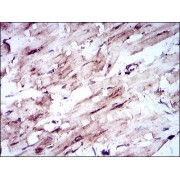
Glucose Transporter 4 / GLUT4 (SLC2A4) Antibody
This gene is a member of the solute carrier family 2 (facilitated glucose transporter) family and encodes a protein that…
Ver producto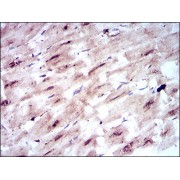
Glucose Transporter 4 / GLUT4 (SLC2A4) Antibody
This gene is a member of the solute carrier family 2 (facilitated glucose transporter) family and encodes a protein that…
Ver producto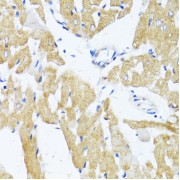
Glucose Transporter 4 / GLUT4 (SLC2A4) Antibody
SLC2A4 Antibody is a Rabbit Polyclonal Antibody against SLC2A4.…
Ver producto