Mouse FASL/Faslg (Factor Related Apoptosis Ligand) ELISA Kit
Contáctenos para saber el precio
Por favor contáctenos para obtener información detallada sobre el precio y disponibilidad.
Name
Mouse FASL/Faslg (Factor Related Apoptosis Ligand) ELISA Kit
Category
ELISA Kits
Provider
FineTest
Reference
EM1015
Tested Applications
ELISA
Documentos del producto
Instrucciones
Data sheet
Especificaciones del producto
| Category | ELISA Kits |
| Reactivity | Mouse |
| Detection Method | Colorimetric |
| Assay Data | 4 hours |
| Assay Type | Sandwich ELISA, Double Antibody |
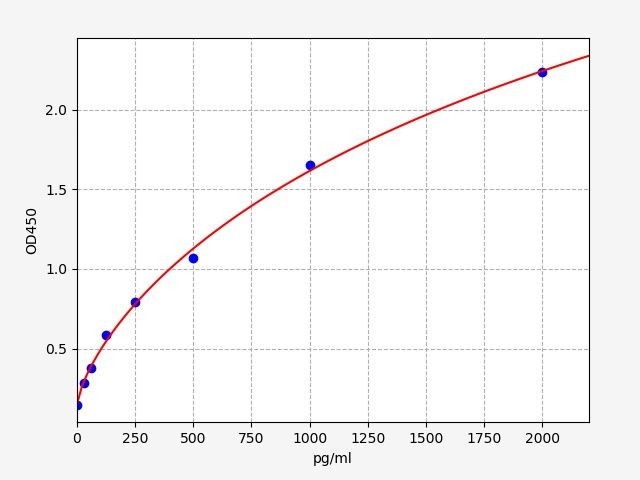
| Test Range | 31.25-2000pg/ml |
| Sensitivity | 18.75pg/ml |
| Size 1 | 96T |
| Tested Applications | ELISA |
| Sample Type | Serum, Plasma, Cell Culture Supernatant, cell or tissue lysate, Other liquid samples |
| Availability | Shipped within 10-14 working days. |
| Storage | 2-8 °C for 12 months |
| UniProt ID | P41047 |
| Alias | Tumor necrosis factor ligand superfamily member 6,APTL,FASL,CD178,CD95L,ALPS1B,CD95-L,TNFSF6,TNLG1A,APT1LG1,Apoptosis antigen ligand,Fas antigen ligand |
| Background | Elisa kits for FASLG |
| Status | RUO |
Background
Fas Ligand (FASLG), also referred to as CD95L, is a type-II transmembrane protein belonging to the tumor necrosis factor (TNF) family. FASLG plays a pivotal role in regulating apoptosis, particularly in immune system homeostasis and cytotoxic T-cell-mediated killing. It binds to its receptor, Fas (CD95), triggering the formation of the death-inducing signaling complex (DISC) and initiating the caspase cascade, ultimately leading to programmed cell death. This pathway is crucial for eliminating autoreactive lymphocytes, maintaining immune tolerance, and resolving immune responses after infections. Dysregulation of FASLG-Fas signaling has been implicated in various pathological conditions, including autoimmune disorders, cancer, and chronic inflammatory diseases. In cancer, tumor cells often evade apoptosis by downregulating Fas or mutating components of the pathway. Conversely, overexpression of FASLG in the tumor microenvironment can contribute to immune evasion by inducing apoptosis in Fas-expressing tumor-infiltrating lymphocytes. Therapeutic strategies targeting FASLG or its signaling pathway are being explored for their potential in cancer immunotherapy, autoimmune disease modulation, and transplantation tolerance. Additionally, genetic polymorphisms in the FASLG gene have been associated with altered susceptibility to diseases, further highlighting its importance in immune regulation and disease pathology.
Productos relacionados

Tumor Necrosis Factor Ligand Superfamily Member 6 (FasLG) Antibody
FasLG Antibody is a Rabbit Polyclonal antibody against FasLG. This gene is a member of the tumor necrosis factor superfa…
Ver producto

Human Tumor Necrosis Factor Ligand Superfamily Member 6 (FASLG) ELISA Kit
Human Tumor Necrosis Factor Ligand Superfamily Member 6 (FASLG) ELISA Kit is an ELISA Kit for the in vitro quantitative …
Ver producto