Human AIRE (Autoimmune regulator) ELISA Kit
Contáctenos para saber el precio
Por favor contáctenos para obtener información detallada sobre el precio y disponibilidad.
Name
Human AIRE (Autoimmune regulator) ELISA Kit
Category
ELISA Kits
Provider
FineTest
Reference
EH1501
Tested Applications
ELISA
Documentos del producto
Instrucciones
Data sheet
Especificaciones del producto
| Category | ELISA Kits |
| Reactivity | Human |
| Detection Method | Colorimetric |
| Assay Data | 4 hours |
| Assay Type | Sandwich ELISA, Double Antibody |
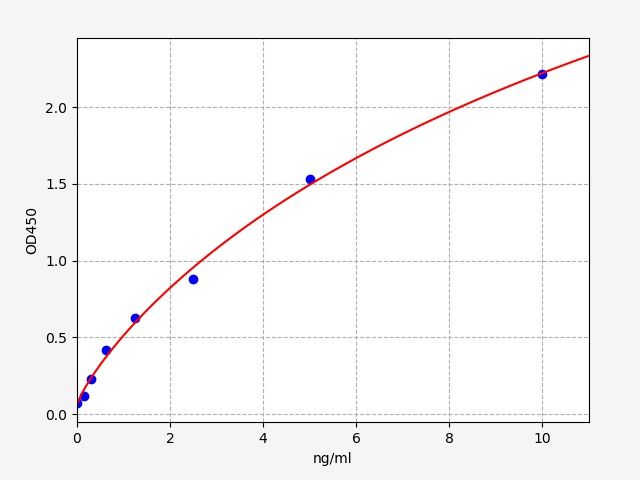
| Test Range | 0.156-10ng/ml |
| Sensitivity | 0.094ng/ml |
| Size 1 | 96T |
| Tested Applications | ELISA |
| Sample Type | Serum, Plasma, Cell Culture Supernatant, cell or tissue lysate, Other liquid samples |
| Availability | Shipped within 10-14 working days. |
| Storage | 2-8 °C for 12 months |
| UniProt ID | O43918 |
| Alias | AIRE1,APECED,APS1,APSI,PGA1 |
| Background | Elisa kits for AIRE |
| Status | RUO |
Background
The Autoimmune Regulator (AIRE) is a protein encoded by the AIRE gene, and it plays a critical role in immune tolerance and the prevention of autoimmune diseases. AIRE is primarily expressed in a specialized type of cell called medullary thymic epithelial cells (mTECs) found in the thymus gland. AIRE functions as a transcriptional regulator, controlling the expression of a wide range of tissue-specific antigens (TSAs) within mTECs. These TSAs represent proteins that are normally expressed in various tissues. By inducing the expression of TSAs in the thymus, AIRE ensures that developing T cells encounter a diverse array of self-antigens during their maturation process.The exposure of developing T cells to self-antigens in the thymus is crucial for their selection and education. T cells that recognize self-antigens too strongly or too weakly are eliminated or rendered tolerant, respectively, through a process known as central tolerance. AIRE-mediated expression of TSAs in mTECs is a key mechanism by which central tolerance is maintained, helping to prevent the development of autoimmune responses against self-tissues. Mutations in the AIRE gene lead to a rare autoimmune disorder known as autoimmune polyendocrine syndrome type 1 (APS-1), also called autoimmune polyendocrinopathy-candidiasis-ectodermal dystrophy (APECED). APS-1 is characterized by the development of multiple autoimmune diseases affecting various endocrine organs, such as the adrenal glands, parathyroid glands, and pancreas, as well as other tissues. These autoimmune manifestations result from defects in central tolerance due to impaired AIRE function, leading to the escape of autoreactive T cells from thymic deletion.
Productos relacionados

Autoimmune Regulator (AIRE) Antibody
AIRE Antibody is a Rabbit Polyclonal antibody against AIRE. This gene encodes a transcriptional regulator that forms nuc…
Ver producto
Autoimmune Regulator Phospho-Ser156 (AIRE pS156) Antibody
Rabbit polyclonal antibody against AIRE protein. Immunogen region is Internal. Specificity is as follows for the reactiv…
Ver producto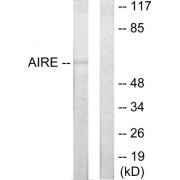
Autoimmune Regulator (AIRE) Antibody
Rabbit polyclonal antibody against AIRE protein. Immunogen region is Internal.…
Ver producto