Adenylate Kinase 3 (AK3) Antibody
377€ (100 µg)
Por favor contáctenos para obtener información detallada sobre el precio y disponibilidad.
Name
Adenylate Kinase 3 (AK3) Antibody
Category
Primary Antibodies
Provider
Abbexa
Reference
abx230246
Tested Applications
ELISA, WB, IHC, IP
Description
AK3 Antibody is a Rabbit Polyclonal against AK3.
Documentos del producto
Instrucciones
Data sheet
Especificaciones del producto
| Category | Primary Antibodies |
| Immunogen Target | Target: Adenylate Kinase 3 (AK3) Immunogen: adenylate kinase 3 |
| Host | Rabbit |
| Reactivity | Human, Mouse, Rat |
| Assay Type | Concentration: 2 mg/ml |
| Recommended Dilution | WB: 1/500 - 1/5000, IHC: 1/20 - 1/200, IP: 1/200 - 1/2000. Optimal dilutions/concentrations should be determined by the end user. |
| Clonality | Polyclonal |
| Conjugation | Unconjugated |
| Isotype | IgG |
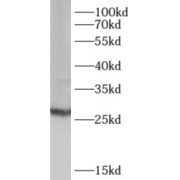
| Observed MW | Observed MW: 26 kDa |
| Purity | ≥ 95% (SDS-PAGE) |
| Purification | Purified by immunogen affinity chromatography. |
| Size 1 | 100 µg |
| Form | Liquid |
| Tested Applications | ELISA, WB, IHC, IP |
| Buffer | PBS, pH 7.3, with 0.02% sodium azide and 50% glycerol. |
| Availability | Shipped within 5-12 working days. |
| Storage | Aliquot and store at -20°C. Avoid repeated freeze/thaw cycles. |
| Dry Ice | No |
| UniProt ID | Q9UIJ7 |
| Gene ID | 50808 |
| OMIM | 609290 |
| Alias | AK3L1,AK6,AKL3L |
| Background | Antibody anti-AK3 |
| Status | RUO |
| Note | THIS PRODUCT IS FOR RESEARCH USE ONLY. NOT FOR USE IN DIAGNOSTIC, THERAPEUTIC OR COSMETIC PROCEDURES. NOT FOR HUMAN OR ANIMAL CONSUMPTION. |
Background
AK3 is localized within the mitochondrial matrix and utilizes GTP as a phosphate donor instead of ATP, distinguishing it from other AK isoforms. AK3 primarily supports mitochondrial nucleotide exchange, particularly during periods of cellular energy stress. It is abundant in tissues with high-energy demands, such as the brain, liver, and kidneys. AK3 contributes to mitochondrial respiration by facilitating ADP recycling necessary for oxidative phosphorylation. Knockout studies demonstrate that AK3 deficiency disrupts ATP synthesis and exacerbates oxidative stress, which can contribute to neurodegenerative conditions. AK3 has also been implicated in regulating mitochondrial dynamics and maintaining redox balance.