Abhydrolase Domain Containing 10 (ABHD10) Antibody (FITC)
169€ (20 µg)
Por favor contáctenos para obtener información detallada sobre el precio y disponibilidad.
Name
Abhydrolase Domain Containing 10 (ABHD10) Antibody (FITC)
Category
Primary Antibodies
Provider
Abbexa
Reference
abx336613
Description
ABHD10 Antibody (FITC) is a Rabbit Polyclonal against ABHD10.
Documentos del producto
Instrucciones
Data sheet
Especificaciones del producto
| Category | Primary Antibodies |
| Immunogen Target | Target: Abhydrolase Domain Containing 10 (ABHD10) Immunogen: Recombinant Human Mycophenolic acid acyl-glucuronide esterase, mitochondrial protein (113-214AA). |
| Host | Rabbit |
| Reactivity | Human |
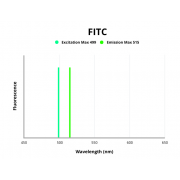
| Detection Method | Laser Line: 488 Excitation/Emission: 499/515 |
| Recommended Dilution | Optimal dilutions/concentrations should be determined by the end user. |
| Clonality | Polyclonal |
| Conjugation | FITC |
| Isotype | IgG |
| Purity | > 95% |
| Purification | Purified by Protein G. |
| Size 1 | 20 µg |
| Size 2 | 50 µg |
| Size 3 | 100 µg |
| Size 4 | 200 µg |
| Size 5 | 1 mg |
| Form | Liquid |
| Buffer | 0.01 M PBS, pH 7.4, 0.03% Proclin-300 and 50% Glycerol. |
| Availability | Shipped within 5-10 working days. |
| Storage | Aliquot and store at -20°C. Avoid exposure to light. Avoid repeated freeze/thaw cycles. |
| Dry Ice | No |
| UniProt ID | Q9NUJ1 |
| Gene ID | 55347 |
| Alias | ABHD10 |
| Background | Antibody anti-ABHD10 |
| Status | RUO |
| Note | THIS PRODUCT IS FOR RESEARCH USE ONLY. NOT FOR USE IN DIAGNOSTIC, THERAPEUTIC OR COSMETIC PROCEDURES. NOT FOR HUMAN OR ANIMAL CONSUMPTION. |
Background
ABHD10 (Abhydrolase Domain Containing 10) is a member of the α/β hydrolase fold family of enzymes, characterized by a conserved core structure. This protein primarily functions as a serine hydrolase and has been implicated in lipid metabolism and detoxification processes. ABHD10 localizes to the mitochondria, where it participates in regulating oxidative stress and maintaining cellular homeostasis. It is associated with deglutathionylation reactions, particularly impacting mitochondrial proteins. Dysregulation of ABHD10 activity has been linked to metabolic disorders and oxidative stress-related diseases.
Productos relacionados
Abhydrolase Domain Containing 10 (ABHD10) Antibody
Rabbit Polyclonal against the ABHD10 protein.…
Ver producto
Human Abhydrolase Domain Containing 10 (ABHD10) Protein
Abhydrolase Domain Containing 10 is a recombinant enzyme.…
Ver producto Abhydrolase Domain Containing 10 (ABHD10) Antibody
ABHD10 Antibody is a Rabbit Polyclonal against ABHD10.…
Ver producto